Opinel
Large Beech Wood Cutting Board
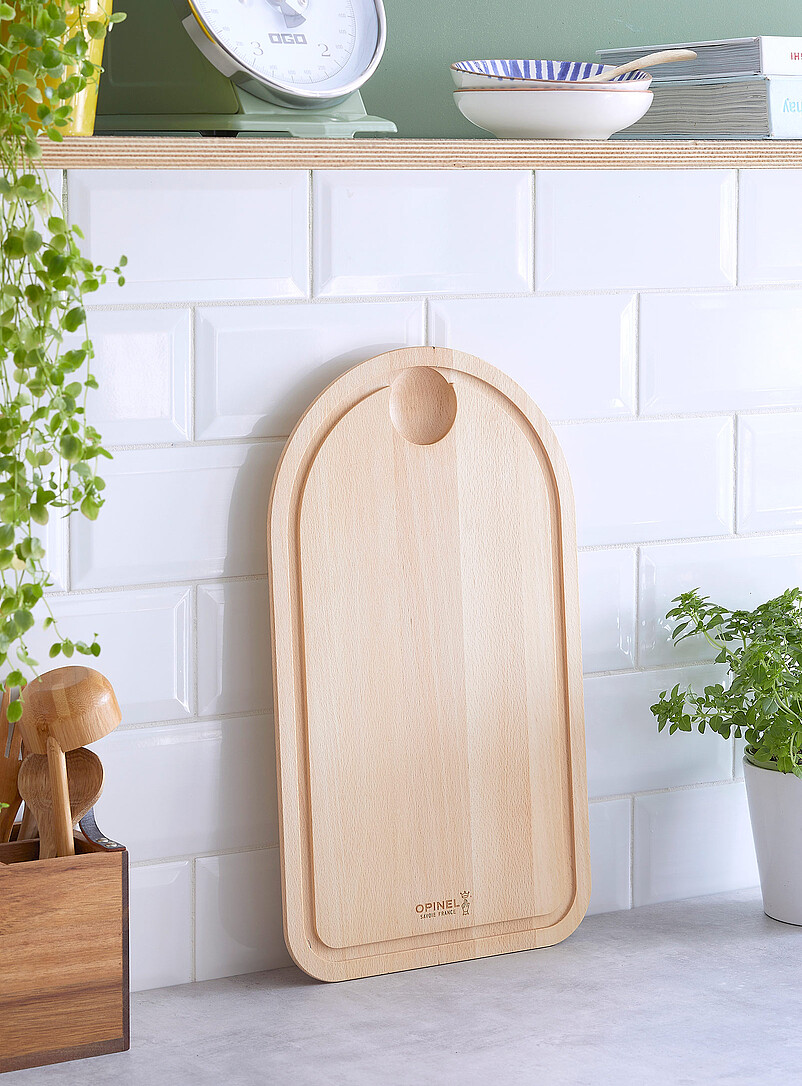
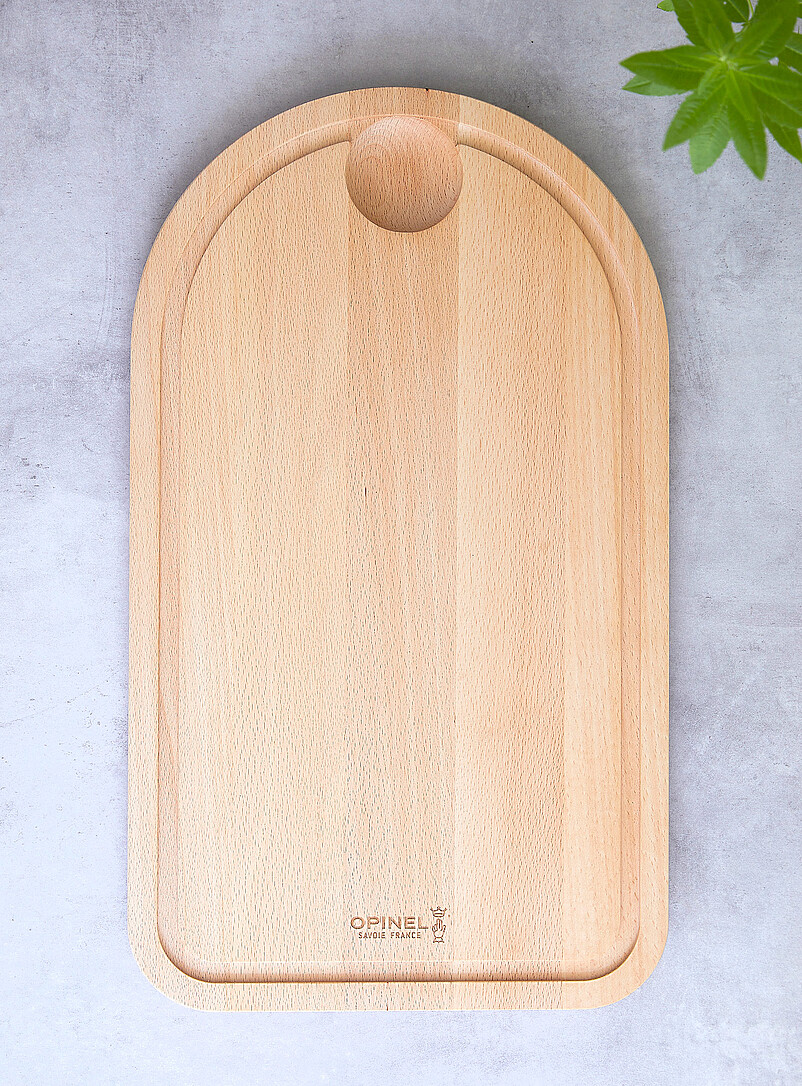
This large Opinel cutting board, made from beech wood, measures 11 by 18.5 inches (27.5 x 47 cm) and is designed for slicing meats, roasts, and poultry. It features a perimeter juice groove and gutter to collect liquids, along with an engraved logo. Crafted in Italy, the natural wood finish means each board is unique with slight variations in appearance.
- Material
- Beech wood
- Category
- Home & Garden > Kitchen & Dining > Kitchen Tools & Utensils > Cutting Boards
Specifications
Large beech wood cutting board with juice well for mess-free cutting of meats and poultry.
Gutter and juice well for mess-free use; Engraved logo; Made of beech wood; Made in Italy; Each piece unique.
- Material
- Beech wood
- Gender
- unisex
- Condition
- new
- Category
- Home & Garden > Kitchen & Dining > Kitchen Tools & Utensils > Cutting Boards
Additional Attributes
- gutter and juice well
- engraved logo
- made in Italy
- natural wood
- unique piece
- large
- mess-free use
- perfect for cutting meats roasts and poultry
- designed for easy use and convenient storage
Product Insights
The Opinel Large Beech Wood Cutting Board offers a dense, closed-grain beech wood surface with Janka ~1300 hardness that resists knife dulling and stain absorption, paired with a deep juice groove and 2.5 cm thickness for stable carving of whole poultry (5–12 lb) and serving 4–6, while requiring pre-oiling before first use and regular hand-washing and re-oiling to maintain its patina and prevent warping; at 120 CAD it reflects Opinel’s 130-year woodworking heritage but is not designed for heavy bone chopping.
Verified claims
- Material
- 100% beech wood: closed grain resists stains and odors, Janka ~1300 hardness protects knife edges.
- Thickness
- 2.5 cm thick board: deep juice groove and enough mass for stable carving without a mat.
- Use cases
- Ideal for carving poultry and doubles as a serving board; not for cleaving bones.
- Maintenance
- Ships untreated; oil before first use with olive or sesame oil.
- Patina
- Engraved with the Opinel logo; beech grain selection mirrors the brand's 1890 knife-handle standards.
- Finish
- Untreated beech develops patina and should be oiled before first use.
- Juice well
- Juice well captures whole-chicken runoff, resists staining, and keeps knives clear of the groove.
- Carving capacity
- Fits whole 5–12 lb poultry with knife clearance and 7-inch work zone; no heavy bone chopping.
- Stability
- ~5 lb mass keeps board planted during carving, no damp towel needed.
- Serving capacity
- 11-inch width serves as platter for 4–6 people.
- Warp resistance
- Resists warping from moisture and temperature changes over years of use
- Care routine
- Ships untreated; recommended routine is to oil before first use, hand-wash, and re-oil with a light cooking oil after cleaning.
- Use limitations
- Not designed for heavy bone chopping or cleaving through joints.
- Cleaning
- Do not put in dishwasher; hand wash with a brush and washing-up liquid in lukewarm water, then dry thoroughly. For deeper cleaning, rub with salt and white vinegar.
- Oiling
- Untreated beech should be oiled before first use and re-oiled regularly.
- Serving use
- 11x18.5-inch beech board: carving and serving board for 4-6.
- Initial care
- Board ships un-oiled; oiling before first use nourishes the wood and deepens its color.
- Juice groove
- Full-perimeter juice groove holds runoff from large roasts; board is for slicing, not heavy chopping.
- Price value
- At 120 CAD, offers Opinel's 130-year beech wood heritage at a price competitive with John Boos boards.
- Knife friendliness
- Beech wood's 1300 Janka hardness resists cuts without dulling knives.
- Food safety
- The board is BPA-free and FDA-approved.
- Origin
- French-designed and made in Italy.
Product record
- Title
- Large Beech Wood Cutting Board
- Brand
- Opinel
- Price
- 120 CAD
- Availability
- In stock
Buying Guide
0 comparisons · 3 sourcesUses
Carving meats, roasts, and poultry
This large beech wood board is intended by the retailer for cutting meats, roasts, and poultry. A gutter and juice well inset near the perimeter are designed to catch drips for mess-free carving, and the board is designed for easy use.[1,2,3]
Hang it up between uses
This large beech board is designed with convenient storage in mind: a circular cutout near the top of its rounded arch lets you hang it upright on a hook when it's not in use, keeping it off the counter and easy to reach for carving meats, roasts, or poultry.[1,2,3]
Image Analysis
3 images- 01
Product
A single light beech wood cutting board shown standing upright against a tiled backsplash; board has a rounded top with a circular hanging hole and an inner recessed juice groove. A small branded stamp near the bottom edge reads OPINEL.
- Overall shapeRectangular board with a rounded top and a flat bottom, shown standing upright and leaning against the wall.
1 region
x 0.28 · y 0.18 · w 0.44 · h 0.68 (high) - Hanging holeCircular cutout centered near the top inside the rounded area, recessed into the board.
1 region
x 0.46 · y 0.19 · w 0.08 · h 0.07 (high) - Juice grooveShallow recessed channel following the board perimeter set in from the outer edge, forming an inner rounded-rect border.
1 region
x 0.30 · y 0.22 · w 0.40 · h 0.62 (high) - Surface material and grainLight beech wood surface composed of long vertical strips with subtle color variation and a smooth, matte finish.
1 region
x 0.30 · y 0.22 · w 0.40 · h 0.62 (high) - Brand stamp“OPINEL”
1 region
x 0.46 · y 0.73 · w 0.08 · h 0.05 (medium) - Bottom edge detailRounded outer corners at the bottom with the juice groove terminating near the bottom edge; the board sits flat on the countertop.
1 region
x 0.30 · y 0.74 · w 0.40 · h 0.12 (high)
Other
Kitchen lifestyle scene with white subway tile backsplash, a light wood shelf with scale and bowls above, a wooden utensil holder at lower left, and a potted herb at lower right; soft diffuse lighting and natural shadows.
- Backdrop tilesGlossy white rectangular subway tiles in a running bond pattern covering the wall behind the board.
1 region
x 0.00 · y 0.00 · w 1.00 · h 0.74 (high) - Shelf stagingThin light wood shelf near the top with a pastel green kitchen scale and stacked bowls on top, partially visible.
1 region
x 0.00 · y 0.00 · w 1.00 · h 0.18 (high) - Utensil holderSquare wooden container at lower left holding wooden utensils and a small wooden mallet, cropped by the image edge.
1 region
x 0.00 · y 0.66 · w 0.22 · h 0.26 (high) - Potted herbSmall potted green herb in a white pot located at lower right on the countertop.
1 region
x 0.78 · y 0.64 · w 0.18 · h 0.22 (high) - Lighting and shadowsSoft, diffuse overhead or front lighting producing gentle shadows behind and to the right of the board and soft highlights on glossy tiles.
- Image crop and compositionVertical composition centered on the cutting board with some staging elements intentionally cropped at the image edges.
Colors
light beech· main surface#E3CAB5- Overall shapeRectangular board with a rounded top and a flat bottom, shown standing upright and leaning against the wall.
- 02
Product
Top-down view of a single beech wood cutting board with a rounded arched top, integrated circular finger hole, recessed juice groove near the perimeter, visible vertical wood grain strips, and a burned brand stamp near the bottom center.
- Overall shapeRectangular board with a semicircular arched top and squared bottom corners visible from top-down.
1 region
x 0.07 · y 0.02 · w 0.86 · h 0.96 (high) - Material and finishLight beech wood surface with fine visible vertical grain and a smooth, matte finish.
1 region
x 0.12 · y 0.08 · w 0.76 · h 0.84 (high) - Juice grooveShallow recessed groove running parallel to the board edge, forming a continuous border inset from the outer rim.
1 region
x 0.11 · y 0.07 · w 0.78 · h 0.86 (high) - Finger holeCircular recessed finger hole centered on the top rounded edge, carved into the board with visible inner shadow.
1 region
x 0.43 · y 0.02 · w 0.14 · h 0.12 (high) - Wood panel constructionBoard surface shows narrow vertical strips of wood with subtle color variation indicating joined panels running lengthwise.
1 region
x 0.15 · y 0.12 · w 0.70 · h 0.78 (high) - Brand stampBurned or stamped brand mark near the bottom center of the board above the inner groove.
1 region
x 0.39 · y 0.78 · w 0.22 · h 0.10 (high) - Brand text line 1“OPINEL”
1 region
x 0.43 · y 0.80 · w 0.14 · h 0.03 (high) - Brand text line 2“SAVOIE FRANCE”
1 region
x 0.42 · y 0.83 · w 0.18 · h 0.03 (high) - Small iconSmall vertical icon or emblem to the right of the brand text, burned into the wood (details visible but small).
1 region
x 0.57 · y 0.79 · w 0.04 · h 0.08 (medium)
Other
Top-down styled studio shot on a light gray concrete surface with a green potted plant partially visible in the top-right corner; soft directional lighting from top-left producing subtle shadows and a clear view of texture.
- Background surfaceLight gray textured concrete or cement surface visible around the board.
1 region
x 0.00 · y 0.00 · w 1.00 · h 1.00 (high) - Prop plantGreen leafy plant placed at the top-right corner overlapping the board slightly, used as a styling prop.
1 region
x 0.80 · y 0.00 · w 0.20 · h 0.18 (high) - Shot compositionBoard centered vertically in the frame with even margins left and right; image cropped close to board edges at top and bottom.
- Lighting and shadowSoft, diffuse lighting from upper-left producing subtle shadowing inside the finger hole and faint shadow along the right edge of the board.
Colors
light beech· main surface#EBC4A3warm light brown (recess)· juice groove and finger hole interior#D5AB84burned brown· brand stampnone· nonePackaging- Overall shapeRectangular board with a semicircular arched top and squared bottom corners visible from top-down.
- 03
Product
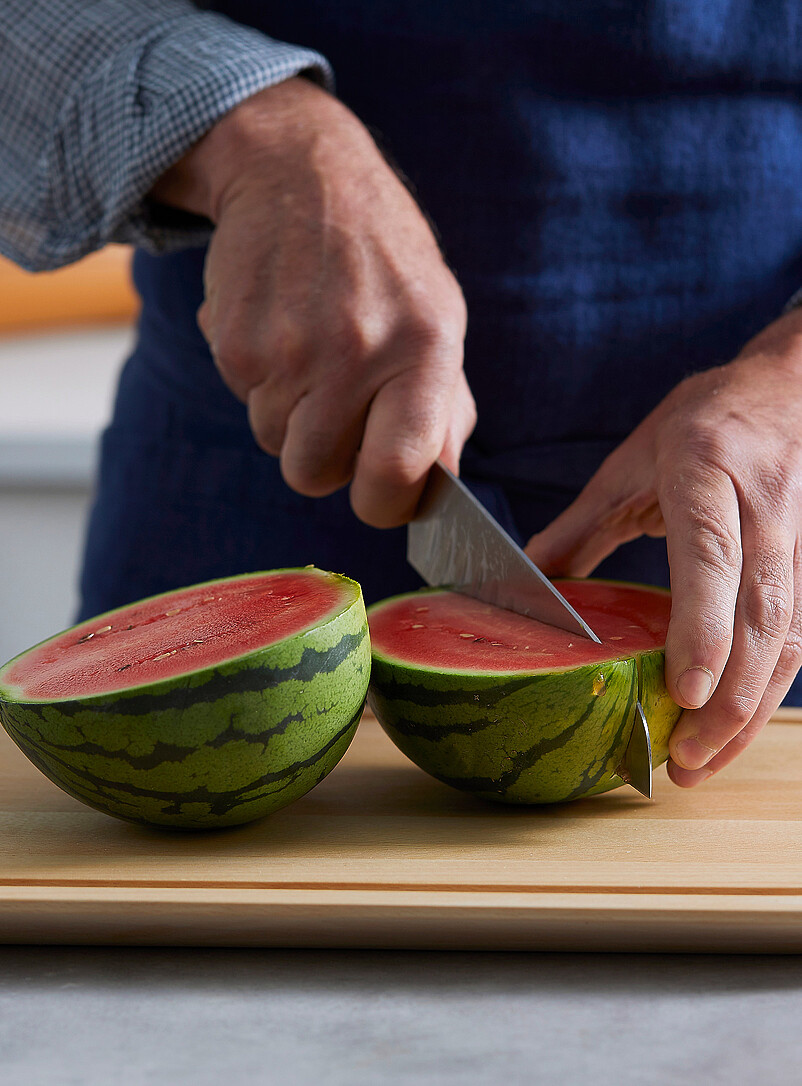
A flat rectangular light-wood cutting board with a smooth planed surface and a narrow recessed channel near its long edge; shown laid flat on a countertop with two watermelon halves on top.
- Overall shapeRectangular flat board with straight long edges and slightly rounded corners visible at the bottom-right corner of the board.
1 region
x 0.03 · y 0.68 · w 0.94 · h 0.26 (high) - Material and finishLight natural beech wood surface with fine linear grain, planed/sanded smooth finish and a matte appearance.
1 region
x 0.08 · y 0.70 · w 0.84 · h 0.20 (high) - Edge detailNarrow darker wood trim or recessed band running along the visible long edge of the board, forming a thin contrasting line between the top surface and the board's face.
1 region
x 0.04 · y 0.88 · w 0.92 · h 0.05 (high) - Juice groove / channelTwo parallel shallow recessed grooves set close to the top long edge of the board, visible as thin lines running along the board's length.
1 region
x 0.09 · y 0.76 · w 0.82 · h 0.03 (high) - Surface conditionClean, unmarked surface with no visible printed text, logos, or stickers on the visible face.
Other
Close-up lifestyle shot showing hands slicing a watermelon on the board; shallow depth of field with a blurred background including a blue apron and checked shirt sleeve.
- Hands and activityTwo adult hands are actively holding and cutting a watermelon with a stainless-steel knife; the right hand holds the fruit while the left hand grips the knife handle.
1 region
x 0.40 · y 0.09 · w 0.53 · h 0.60 (high) - Knife bladeVisible stainless-steel knife blade with a pointed tip slicing into the watermelon flesh.
1 region
x 0.48 · y 0.33 · w 0.28 · h 0.28 (high) - Props and backgroundPerson wearing a dark blue apron and a grey checked long-sleeve shirt; blurred background beyond the subject.
1 region
x 0.05 · y 0.02 · w 0.90 · h 0.48 (medium) - Surface and lightingBoard rests on a light-colored countertop; scene lit with soft directional light from the left producing gentle shadows under hands and fruit.
1 region
x 0.00 · y 0.60 · w 1.00 · h 0.40 (medium) - Shot compositionVertical close-up crop focused on the cutting action and the board, with shallow depth of field isolating foreground elements from a blurred background.
Colors
light beech wood· board surfacemedium warm wood· edge trim#83848B- Overall shapeRectangular flat board with straight long edges and slightly rounded corners visible at the bottom-right corner of the board.
Brand PDP Lookup
- Brand
- Opinel
Cutting Board La Classique