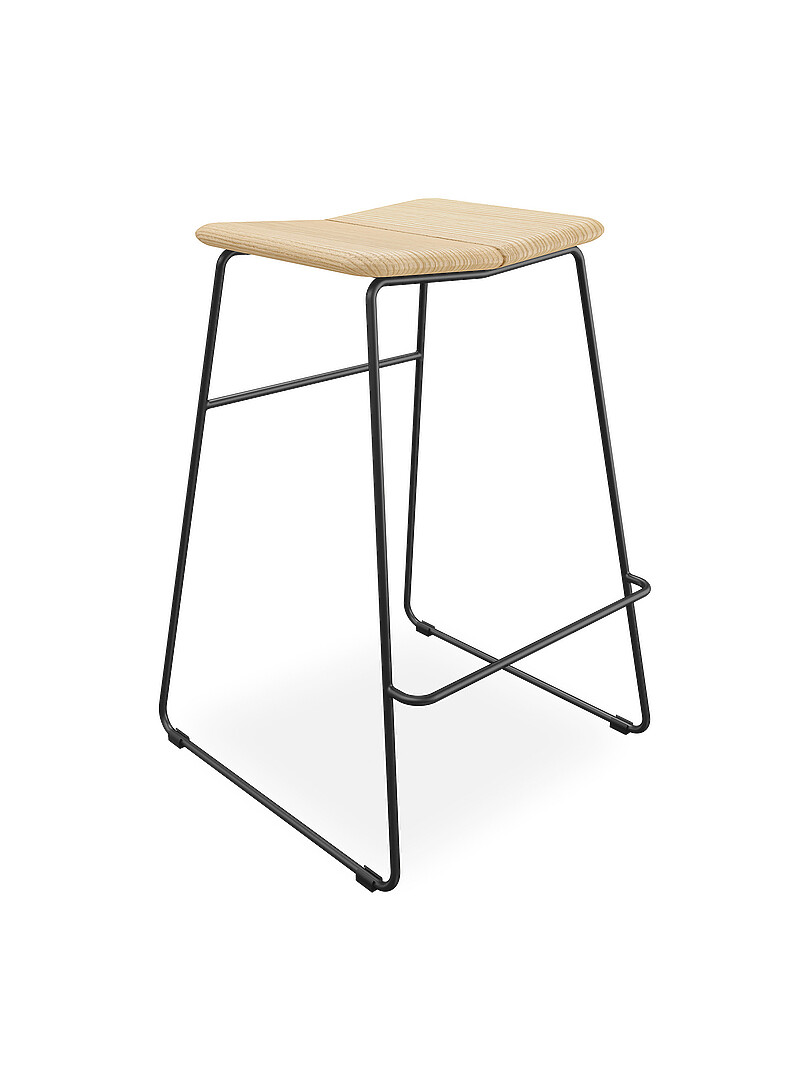
Gus*
Modern Ash Wood And Metal Counter Stool
A modern counter stool featuring a responsibly sourced solid ash wood seat and a powder-coated metal frame in black or white. Designed for kitchen counters or bar-height surfaces, it measures 24 inches high, 19.25 inches wide, and 18.5 inches deep. Some assembly is required.
- Material
- Solid ash wood seat, powder-coated metal frame
- Category
- Furniture > Chairs > Table & Bar Stools
Size
Specifications
A modern Scandinavian counter stool with a curved seat and an openwork metal frame, available with black or white powder-coated metal.
Powder-coated metal frame; responsibly sourced solid ash wood seat.
- Material
- Solid ash wood seat, powder-coated metal frame
- Secondary
- metal
- Gender
- unisex
- Age Group
- adult
- Condition
- new
- Dimensions
- 19.25x18.5x24 in
- Category
- Furniture > Chairs > Table & Bar Stools
Additional Attributes
- powder-coated metal frame
- responsibly sourced solid ash wood seat
- curved seat
- openwork frame
- some assembly required
Product Insights
This counter stool combines mid-century Scandinavian functionalist design with honest construction: a solid ash seat (Janka 1320 hardness) that develops a warm patina and hides marks, and a powder-coated steel open frame that maintains airy sightlines and resists rust. The tradeoff is a bare seat with no cushions—prioritizing durability and clean lines over softness—and a straightforward 15-30 minute assembly. Light and stable, it slides easily for knee clearance, while North American ash sourcing reduces transport impact.
Verified claims
- Design lineage
- Curved ash seat and open metal frame embody mid-century Scandinavian functionalist design.
- Durability
- Ash seat (Janka 1320) resists damage better than common furniture woods and develops a warm amber patina.
- Wear resistance
- 1320 Janka rating resists dents and scratches; open grain hides new marks.
- Aging resilience
- The ash seat's elasticity helps the curved seat absorb repeated loading without splitting.
- Coating
- Powder coating resists scratches, common cleaners, and prevents rust at welded joints.
- Open frame
- Open steel frame preserves sightlines and keeps the kitchen airy
- Seat design
- The solid ash seat is uncushioned and left with visible grain; the frame's metal joints are exposed.
- Counter fit
- 24 high by 19.25 wide stool fits under a standard counter and slides away
- Material
- Solid ash wood seat left natural; powder-coated steel frame with sealed welds
- Craftsmanship
- The stool is built with exposed metal joints, a continuous curved ash seat, and an openwork steel frame.
- Stability
- Stool feels anchored and wobble-free, yet slides easily.
- Assembly
- Assembly is required and typically takes 15–30 minutes with a Phillips screwdriver; no tools are included.
- Weight
- The stool is light enough to slide easily across a kitchen floor.
- Sourcing
- The responsibly sourced ash is likely drawn from North American regional managed forests, reducing transportation carbon footprint compared with imported tropical hardwoods.
- Design authenticity
- Honest construction with visible ash grain and exposed joints ties to mid-century Danish design.
- Counter height fit
- The 24-inch seat height is the standard for 36-inch counter-height surfaces; industry guidelines list counter-height stools as 24–27 inches for counters 35–39 inches tall.
- Finish color options
- The powder-coated steel frame is available in matte black or white.
Product record
- Title
- Modern Ash Wood And Metal Counter Stool
- Brand
- Gus*
- Price
- 635 CAD
- Availability
- In stock
Image Analysis
2 images- 01
Product
Light natural ash wood flat seat with subtle curved front and center groove mounted on a thin black metal tubular sled frame with integrated footrest and crossbar supports.
- Seat shapeSingle-piece rectangular seat panel with slightly rounded front corners and a shallow central longitudinal groove dividing the seating surface into two subtle halves.
1 region
x 0.18 · y 0.08 · w 0.64 · h 0.18 (high) - Seat surface materialLight natural ash wood with visible linear wood grain running front-to-back and a smooth, matte finish.
1 region
x 0.18 · y 0.08 · w 0.64 · h 0.18 (high) - Frame constructionContinuous thin tubular metal frame forming two inverted U-shaped side supports joined by a horizontal sled base; tubing bends at corners with welded joints visible where bars intersect.
1 region
x 0.12 · y 0.18 · w 0.76 · h 0.70 (high) - Footrest and crossbarFront footrest is a rounded horizontal tube that connects the two side supports and extends into an X-like lower crossbar where it meets the sled base.
1 region
x 0.34 · y 0.48 · w 0.42 · h 0.28 (high) - Frame finishDark matte or satin black finish on the metal tubing.
1 region
x 0.12 · y 0.18 · w 0.76 · h 0.70 (high) - Seat-to-frame connectionSeat panel rests on top of the frame with the tubing running flush beneath the seat edge and visible wrap of the frame under the seat perimeter.
1 region
x 0.23 · y 0.16 · w 0.56 · h 0.16 (medium)
Other
Studio-style product shot on a plain white background with soft shadow on the surface below; three-quarter front-right view showing most of the stool's front and right side.
- View and compositionThree-quarter front-right perspective showing seat and both side supports, slightly elevated camera angle.
- Background and shadowPlain white background with a soft diffuse shadow cast beneath and slightly left of the stool indicating studio lighting from above and right.
1 region
x 0.20 · y 0.70 · w 0.60 · h 0.20 (medium) - Image qualityHigh-resolution, evenly lit product photograph with crisp edges and no visible text or labels in the scene.
Colors
light ash wood· seat#DCC5A4matte charcoal black· metal frame#242424- Seat shapeSingle-piece rectangular seat panel with slightly rounded front corners and a shallow central longitudinal groove dividing the seating surface into two subtle halves.
- 02
Product
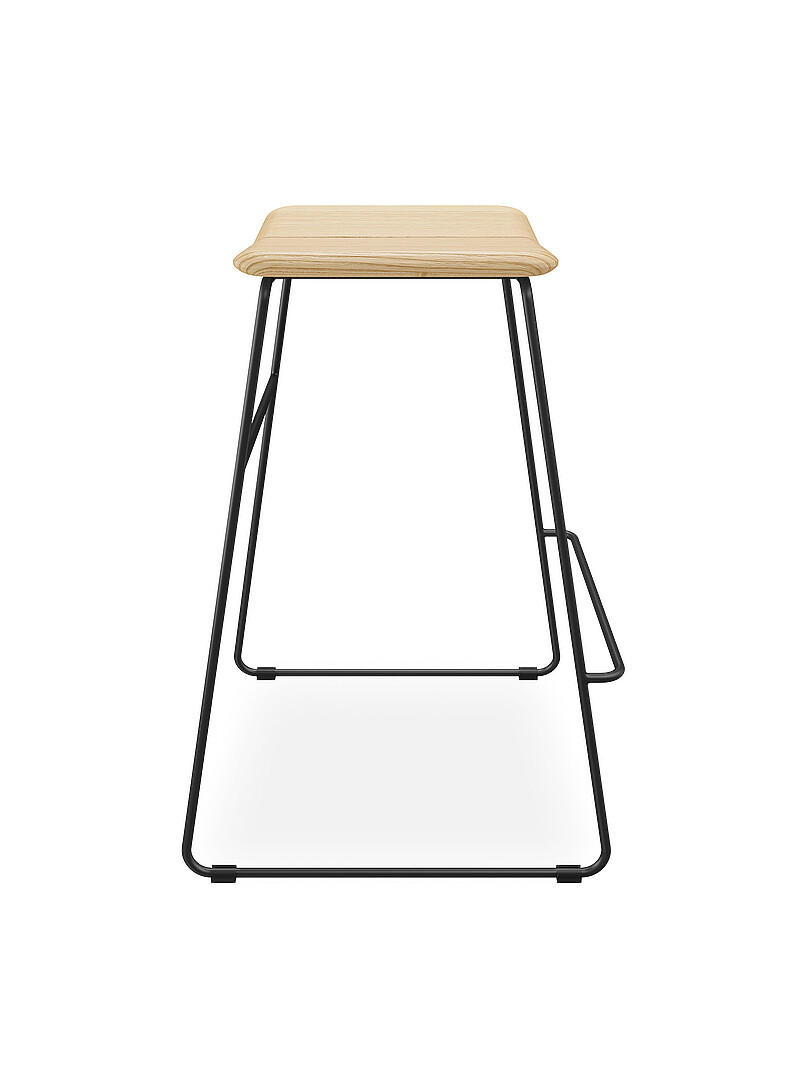
Front-facing counter stool with a thin rectangular light-ash wooden seat and a matte black tubular metal sled base with an integrated side footrest.
- Seat shape and surfaceThin rectangular seat with gently rounded corners and a subtly scooped top surface; visible horizontal ash wood grain and layered veneer edge.
1 region
x 0.26 · y 0.06 · w 0.48 · h 0.12 (high) - Seat edge detailLayered veneer edge visible around the perimeter, showing thin stacked layers of light wood.
1 region
x 0.26 · y 0.06 · w 0.48 · h 0.12 (high) - Base geometryMatte black tubular metal sled base formed by two continuous bent rods that angle outward from the seat to the floor and connect with a horizontal front and rear stretcher.
1 region
x 0.12 · y 0.22 · w 0.76 · h 0.68 (medium) - FootrestRight-side integrated rectangular loop footrest made from the same black tubular metal, attached partway down the leg.
1 region
x 0.68 · y 0.44 · w 0.20 · h 0.18 (high) - Connection clips / glidesSmall square or rectangular dark-colored clips or glides visible where horizontal stretchers meet the floor-level rods and at some joint points.
2 regions
x 0.06 · y 0.82 · w 0.16 · h 0.12 (medium); x 0.78 · y 0.82 · w 0.12 · h 0.12 (medium)
Other
Studio shot on a white background; stool centered and shown front-on with a soft downward shadow beneath; image is well lit and fully in frame.
- Shot compositionProduct centered in the frame and photographed straight-on from the front at seat level.
- BackgroundPlain white seamless background with no visible props or packaging.
- ShadowSoft diffuse shadow directly beneath the stool indicating overhead lighting; shadow fades toward the image edges.
1 region
x 0.18 · y 0.76 · w 0.64 · h 0.22 (high)
Colors
light ash· seat (ash wood)matte black· frame and footrest#1D1D1D- Seat shape and surfaceThin rectangular seat with gently rounded corners and a subtly scooped top surface; visible horizontal ash wood grain and layered veneer edge.
Variants
3 SKUs| SKU | Title | Price | Avail |
|---|---|---|---|
| 4719087 | Modern Ash Wood And Metal Counter Stool - Black - One Size | CA$635.00 | Yes |
| 4719088 | Modern Ash Wood And Metal Counter Stool - Ivory/cream Beige - One Size | CA$635.00 | Yes |
| 4719089 | Modern Ash Wood And Metal Counter Stool - Mint/pistachio Green - One Size | CA$635.00 | Yes |