Simons Maison
Crackle-Glazed Painted Flowers Planter 4.75 In
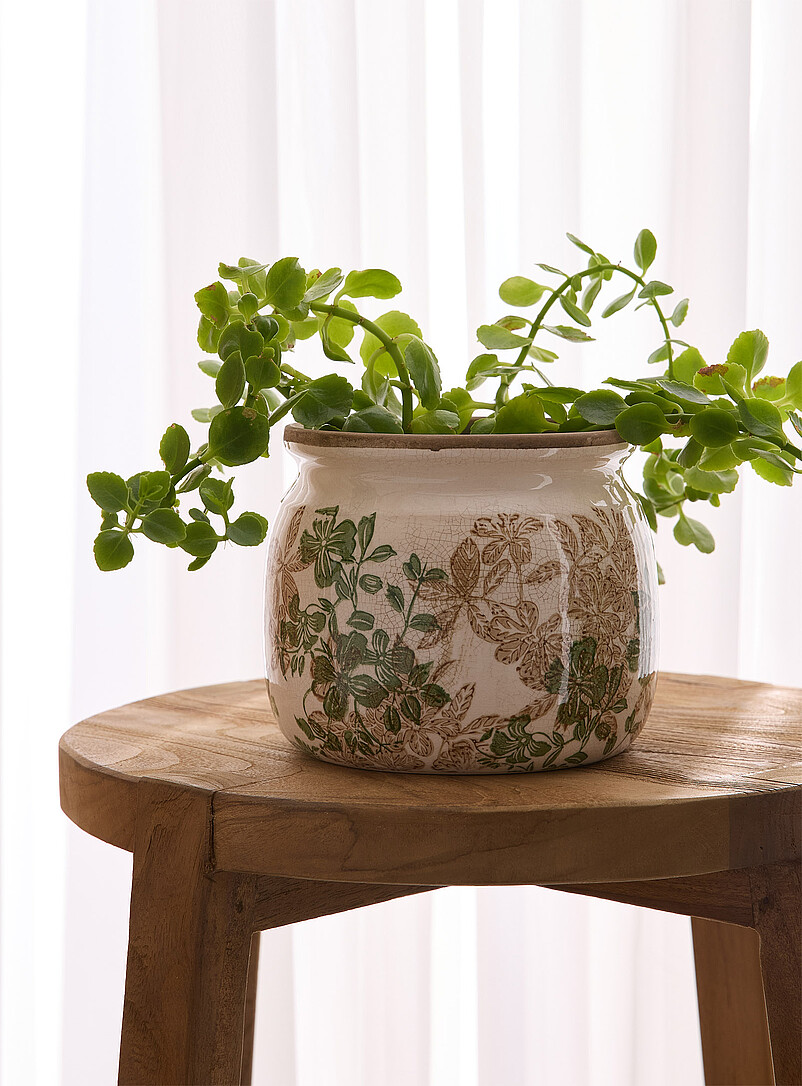
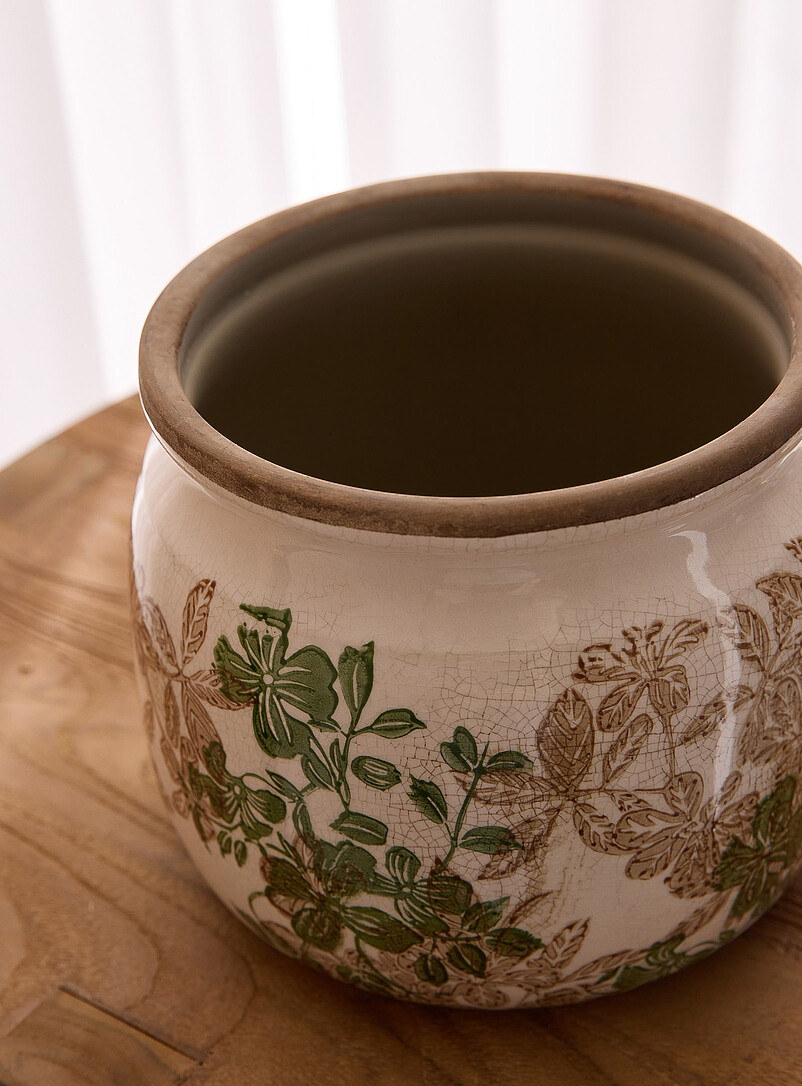
This ceramic planter features a crackle glaze and painted floral motifs in natural tones, making it a decorative accent piece rather than a functional planting container. Its glossy finish and rolled brown rim complement the botanical design, which includes green leaves and brown flower outlines. Suitable for decorative display only, it should not be used with soil directly. Dimensions are 5" (13 cm) high, with a 4.75" (12 cm) opening width and a 6.25" (16 cm) diameter.
- Material
- Shiny ceramic
- Style
- romantic
- Category
- Home & Garden > Decor > Vases
Specifications
A crackle-glazed ceramic planter with painted flowers in natural tones, for decorative use only.
Crackle glaze finish, painted floral design, shiny ceramic surface.
- Material
- Shiny ceramic
- Style
- romantic
- Gender
- unisex
- Condition
- new
- Dimensions
- 6.25x6.25x5 in
- Category
- Home & Garden > Decor > Vases
Additional Attributes
- crackle-glazed
- painted flowers
- natural tones
- shiny ceramic
- decorative-only
Product Insights
The Simons Maison Crackle-Glazed Painted Flowers Planter is an exclusive $18 decorative piece (minimally aged to $72 artisan comparable) from Canada's 185-year-old family-run department store. Each unit features an engineered, smooth-to-the-touch crackle glaze that develops uniquely over time—not a defect—and is limited to indoor use as a cachepot or dry vase/accessory holder due to intentional lack of drainage, staining risk, and thermal sensitivity. At 5 inches tall, it requires pH-neutral cleaning, no soaking, and immediate spill removal; its sealed base suits dry applications but prohibits direct soil or gravel.
Verified claims
- Crackle character
- Crackle finish is deliberately engineered; each planter has a unique, evolving pattern.
- Usage limitations
- Crackle glaze limits planter to decorative use; it has no drainage and is prone to staining and thermal stress.
- Surface feel
- Crackle finish is smooth to the touch despite visible crack lines.
- Cleaning
- Use a pH-neutral detergent and a dedicated microfiber cloth for cleaning.
- Water precautions
- Never soak, avoid thermal shock, and wipe spills immediately to prevent permanent stains.
- Use restrictions
- Indoor decorative use only; use as a cachepot without direct soil or gravel.
- Crazing progression
- Continuing crazing for months after purchase is a normal property, not a defect.
- Scale
- Height 5 inches; compact size accentuates the crackle and floral pattern.
- Care
- For decorative use only; use as cachepot, avoid liquids, and clean with pH-neutral detergent.
- Market position
- Price $18 CAD, exclusive to Simons and limited production, similar to a $72 artisan piece.
- Cachepot use
- Lack of drainage is intentional; use with a nursery pot.
- Non-plant uses
- Sealed base suits dry uses: dry-flower vase, cutlery caddy, or brush holder.
- Intended use
- For display use only; crackle-glaze is traditionally non-functional.
- Brand heritage
- Simons, founded 1840, offers this planter via its exclusive private-label collection.
- Craftsmanship
- Crackle glaze uses an ancient ceramic technique, making each planter one-of-a-kind.
- Finish
- Each planter has a unique engineered crackle glaze that is smooth to the touch.
- Versatility
- At 5 inches tall, it suits bedside tables, cachepots, dry vases, and accessory holders.
- Brand reputation
- Simons Maison is the in-house brand of Canada's 185-year-old family-run department store.
- Crackle authenticity
- Crackle glaze is an intentional craft technique, not a defect.
- Use cases
- Indoor cachepot for plants or dry vase; ideal for small vignettes.
- Value
- Simons Maison: 185-year Canadian heritage; $18 vs. $72 for artisan piece.
- Drainage
- Adding gravel does not create drainage; use a nursery pot inside instead.
- Small-space suitability
- This planter is scaled for compact tabletop vignettes: it stands only 5 inches tall with a 4.75-inch opening, so it fits on windowsills, desks, bathroom countertops, or stacked books.
- Indoor use only
- This planter is intended for indoor decorative use only; it is not suitable for outdoor exposure that may affect the finish.
- Romantic floral style
- The planter carries a crackle-glazed, floral-patterned look with a romantic botanical feel.
Product record
- Title
- Crackle-Glazed Painted Flowers Planter 4.75 In
- Brand
- Simons Maison
- Price
- 18 CAD
- Availability
- In stock
Buying Guide
1 comparison · 5 sourcesUses
Decorative accent for indoor shelves and vignettes
This small 4.75-inch planter with a crackle glaze and hand-painted flowers in natural tones works as a romantic accent piece in your indoor décor. It's intended for decorative purposes only—plants should not be set in soil directly in the planter.[1]
Product comparison
Compared within this brand.
| Crackle-Glazed Painted Flowers Planter 4.75 In: Choose this if you want a small decorative accent: the merchant describes this glossy ceramic planter as bringing a romantic touch, with a crackle glaze and hand-painted flowers in natural green and brown tones on a cream background. It measures 6.25 inches in diameter, 5 inches tall, with a 4.75-inch opening, and comes in one size in the Patterned White color. Note it is intended for decorative purposes only—plants should not be potted in soil directly in it.[1,2] | Grooved Footed Planter 4.75 In: Choose this if you want a small, glossy ceramic cachepot with a footed base and vertical grooves to elevate houseplants—reviewers note it fits standard 4-inch nursery pots, making it popular for repotting grocery-store herbs or displaying ferns and succulents. It comes in Cream Beige or Green (one size, with a 4.75-inch opening, 5-inch diameter, and 6-inch height), but it is decorative-use only: do not plant directly in soil. Note that per reviews, the actual shade can vary slightly from listing photos, and one planter reportedly arrived broken during shipping, so inspect your delivery promptly.[3,4] | Grey Kitty Planter 2.5 In: Choose this if you want a charming, glossy light-grey ceramic cat planter for mini succulents or desktop greenery — it stands 6 inches tall with a 2.5-inch opening that fits a small nursery pot snugly, and buyers report it makes a delightful gift for cat-and-plant lovers. Note it is decorative only (do not plant directly in soil), and its narrow opening and shallow depth exclude most plants larger than a mini succulent, which some buyers found tinier than expected; one buyer also reported it arriving with a broken ear.[5] |
Image Analysis
2 images- 01
Product
A short, rounded ceramic planter with a glossy crackle-glaze cream background, a flared lip with a darker brown rim, and an all-over painted botanical motif in green and brown on the body.
- Overall shapeShort, rounded jar shape with a gently curved body and a slightly flared lip at the top.
1 region
x 0.18 · y 0.32 · w 0.64 · h 0.35 (high) - Surface finishGlossy glazed surface exhibiting visible crackle network across the cream background.
1 region
x 0.20 · y 0.35 · w 0.60 · h 0.30 (high) - Top rimNarrow darker brown rim around the inner edge of the flared lip contrasting with the cream glaze.
1 region
x 0.31 · y 0.40 · w 0.38 · h 0.06 (high) - Botanical decorationPainted botanical motif wrapping the visible front of the planter composed of green leafy clusters and brown floral outlines and detailing.
1 region
x 0.25 · y 0.46 · w 0.50 · h 0.25 (high) - Visible glazing irregularitySlight variation in glaze near the lip where crackle pattern and gloss intensity change, visible as subtle darker lines and spots.
1 region
x 0.28 · y 0.36 · w 0.44 · h 0.18 (medium)
Other
Image shows the planter staged on a round wooden stool with a trailing green plant inside; background is a soft, bright curtain with diffused lighting and gentle shadows.
- Staging surfaceRound wooden stool with visible wood grain and a natural finish supporting the planter.
1 region
x 0.08 · y 0.62 · w 0.84 · h 0.30 (high) - Plant propTrailing green succulent-like plant with rounded leaves spilling over the planter rim and extending outward; plant is used as a prop and not described as packaging.
1 region
x 0.18 · y 0.18 · w 0.64 · h 0.28 (high) - Background and lightingVertical sheer curtains provide a bright, diffused backlight that creates soft highlights on the planter glaze and light shadows on the stool.
- Shot compositionCentered product composition with the planter occupying the middle of the frame and visible top and front surfaces; image is vertically oriented.
Colors
glossy cream· body backgroundmedium botanical green· painted leaves#84644Bwarm brown· painted floral outlines and rim#8D725D- Overall shapeShort, rounded jar shape with a gently curved body and a slightly flared lip at the top.
- 02
Product
Top-front view of a round, crackle-glazed ceramic planter with a rolled brown rim and painted floral motifs in green and brown on an off-white background; interior appears dark and unglazed.
- Overall shapeBulbous, rounded ceramic pot with a wide, circular top opening and a gently curved body tapering inward below the rim.
1 region
x 0.10 · y 0.03 · w 0.80 · h 0.94 (high) - Rim detailThick rolled top rim with a matte brown band around the lip that contrasts with the glazed body; rim interior shows several concentric shadow bands.
1 region
x 0.18 · y 0.03 · w 0.64 · h 0.20 (high) - Interior finishInterior appears dark and unglazed or shadowed, creating a deep uniform dark brown to near-black cavity.
1 region
x 0.28 · y 0.05 · w 0.44 · h 0.38 (high) - Glaze textureCrackle-glaze surface visible across the exterior as a network of fine hairline cracks in the off-white glaze.
1 region
x 0.30 · y 0.36 · w 0.60 · h 0.42 (high) - Painted floral motif - greenClustered green painted leaves and flowers applied over the crackle glaze, with visible brush edges and slight color variation.
1 region
x 0.22 · y 0.52 · w 0.36 · h 0.31 (high) - Printed floral motif - brownBrown floral and leaf outlines printed or painted around the body, often overlapping the crackle pattern and some green elements.
1 region
x 0.52 · y 0.52 · w 0.42 · h 0.34 (high)
Other
Product photographed on a wooden surface with a soft vertical white curtain background; soft, diffused lighting from above-left produces gentle highlights and subtle shadows.
- Supporting surfaceLight-to-medium toned wooden tabletop with visible grain and a knot near the lower-left of the frame.
1 region
x 0.02 · y 0.64 · w 0.66 · h 0.34 (high) - BackgroundOut-of-focus vertical white or pale curtain panels forming a soft neutral backdrop.
1 region
x 0.00 · y 0.00 · w 0.60 · h 0.36 (medium) - Lighting and reflectionsDiffuse soft lighting creates glossy highlights on the glazed surface and gentle shadowing inside the rim; reflections of the light source visible as narrow specular streaks on the pot body.
- Crop and framingImage is a close crop showing the upper and front portion of the planter; lower base and full circumference are out of frame.
1 region
x 0.00 · y 0.00 · w 1.00 · h 1.00 (high)
Colors
antique off-white· body glazewarm brown· rimdeep leaf green· painted leaves and flowers#5A532Dmuted sepia brown· printed floral outlines#9A7B65very dark brown· interior cavity#271707- Overall shapeBulbous, rounded ceramic pot with a wide, circular top opening and a gently curved body tapering inward below the rim.