Meller
Nayah Square Sunglasses
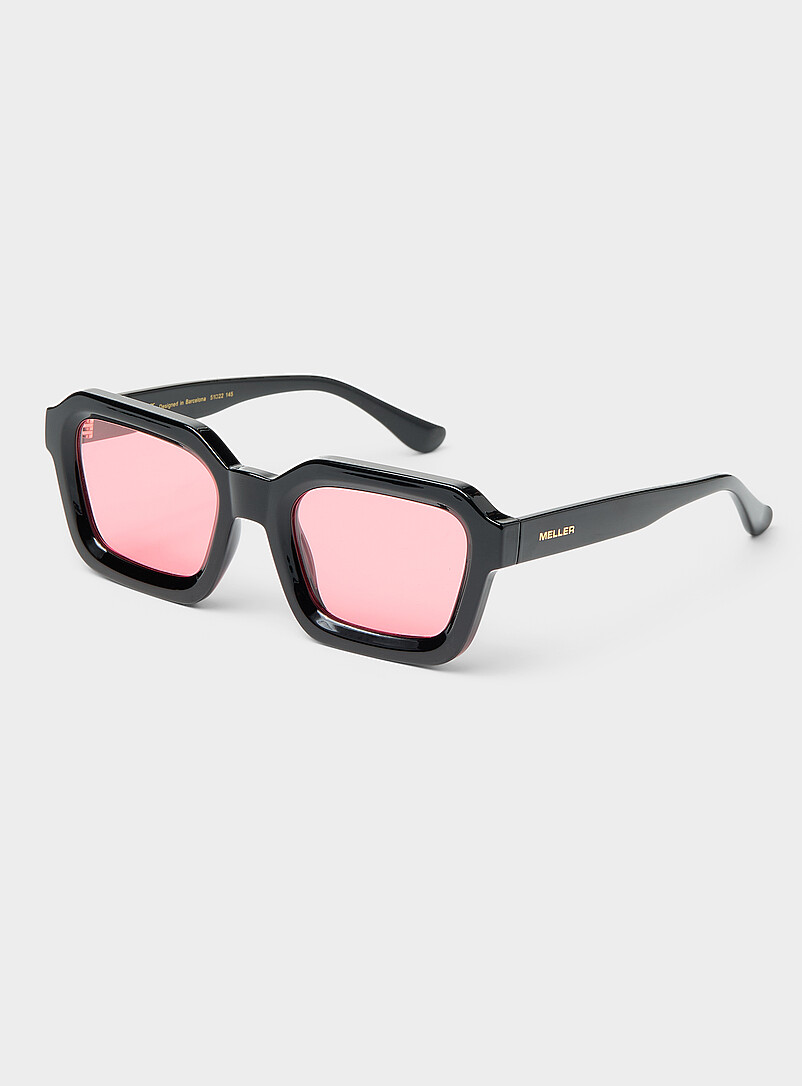
These Meller Nayah square sunglasses feature a glossy black bio-based acetate frame with pink-tinted lenses and UV400 protection. The scratch-resistant lenses measure 51 mm in eye width, with a 22 mm bridge and 145 mm temples. Ideal for everyday wear, they come with a designer case and cleaning cloth.
- Material
- Biosourced acetate
- Gender
- unisex
- Style
- modern, minimalist
- Category
- Apparel & Accessories > Clothing Accessories > Sunglasses
Color
Size
Specifications
Square sunglasses with UV400 protection and a lightweight biosourced acetate frame.
UV400 protection, scratch-resistant treatment, lightweight biosourced acetate frame, includes designer case and cleaning cloth.
- Material
- Biosourced acetate
- Style
- modern, minimalist
- Occasion
- everyday, vacation, beach-day
- Gender
- unisex
- Age Group
- adult
- Condition
- new
- Category
- Apparel & Accessories > Clothing Accessories > Sunglasses
Additional Attributes
- UV400 protection
- scratch-resistant treatment
- biosourced acetate frame
- lightweight
- square frame shape
- includes designer case
- includes cleaning cloth
- eye width: 51 mm
- bridge: 22 mm
- temple: 145 mm
Product Insights
Meller's Nayah Square Sunglasses combine Barcelona-inspired square frames with TAC polarized lenses that deliver over 99% glare extinction without color cast, alongside factory-applied anti-scratch and superhydrophobic coatings that repel water, dust, and oils to keep lenses clear. The lightweight TAC lenses (one-third the weight of glass) reduce strain, and the bio-acetate frame is heat-adjustable for a custom fit while remaining nickel-free and hypoallergenic. A category 2 tint (18–43% VLT) suits both bright and shaded conditions, though the frame width varies by color variant (138 mm black vs. 149 mm maroon brown).
- Polarization
PVA/TAC sandwich construction achieves over 99% glare extinction without color cast.
Why this is supported
The polarized lenses use a PVA polarizing film laminated between two TAC layers, achieving over 99% glare extinction without the color cast common to cheaper extruded polyester polarizers.
the Nayah a uniformly sharp, color-accurate view across the entire lens
TAC polarized lens technology and everyday use — triacetate_cellulose_tac_substrateThe product listing also states:
They feature TAC polarized lenses with anti-scratch and superhydrophobic coating
Are the lenses polarized?- Coatings
Factory-applied anti-scratch and superhydrophobic coatings protect the lens.
Why this is supported
Because bare TAC is soft, a factory-applied anti-scratch coating is essential to prevent marring and maintain optical quality.
Because bare TAC is relatively soft and easily marred, the factory-applied anti-scratch coating is essential to preserving long-term optical quality
TAC polarized lens technology and everyday use — anti_scratch_hardening_over_tacThis coating is applied to the lens surface, not integrated into the material, as confirmed by the Q&A:
The scratch-resistant treatment is an anti-scratch coating applied to the lens surface, not an integrated property of the lens material.
Is the scratch-resistant treatment a coating or integrated into the lens material?The lens also features a superhydrophobic topcoat that beads water:
The superhydrophobic topcoat creates a microscopic texture that forces water into tight beads that roll off with minimal tilt, carrying away dust, oils, and salt spray
TAC polarized lens technology and everyday use — superhydrophobic_lens_coating- Tint
Category 2 tint (18–43% VLT) suits both bright and shaded conditions.
Why this is supported
The black variant's category 2 tint transmits 18–43% of visible light, making it versatile for changing light conditions.
The Black variant's category 2 tint sits in the sweet spot for changing light — dark enough to cut glare on bright afternoons yet translucent enough that you can keep them on when stepping into a café or walking through forest shade, avoiding the disorienting 'tunnel vision' of darker category 3 lenses.
TAC polarized lens technology and everyday use — category_2_daylight_versatilityThe Q&A confirms the lens category:
The Nayah Square Sunglasses have a lens category of 2 (medium dark filter), transmitting 18–43% of visible light.
What is the lens category (e.g., 1-4) and visible light transmission percentage?- Optical clarity
TAC polarized lenses achieve over 99% glare extinction and zero distortion
Why this is supported
The lenses achieve
over 99% glare extinction
TAC polarized lens technology and everyday use — sandwich_construction_polarizationfrom their
TAC polarized lenses
Are the lenses polarized?, and the substrate
eliminates the internal stress birefringence that can introduce distortion
TAC polarized lens technology and everyday use — triacetate_cellulose_tac_substrate- Scratch resistance
Anti-scratch coating protects soft TAC lenses from everyday abrasion, preserving clarity.
Why this is supported
The product's scratch-resistant treatment is an applied coating. Bare TAC is soft, so the coating is critical:
Because bare TAC is relatively soft and easily marred, the factory-applied anti-scratch coating is essential to preserving long-term optical quality
TAC polarized lens technology and everyday use — anti_scratch_hardening_over_tac. The coating creates a hardened surface that withstands everyday abrasion:
it creates a hardened surface that withstands everyday abrasion from wiping, pocket-stashing, and occasional drops onto pavement.
TAC polarized lens technology and everyday use — anti_scratch_hardening_over_tac. A superhydrophobic topcoat also reduces cleaning frequency, indirectly protecting the coating:
superhydrophobic topcoat creates a microscopic texture that forces water into tight beads that roll off with minimal tilt, carrying away dust, oils, and salt spray
TAC polarized lens technology and everyday use — superhydrophobic_lens_coating. These layers preserve optical clarity despite TAC's softness.
- Water beading
Water beads and rolls off, carrying dust and oil, so lenses stay clear with minimal cleaning.
Why this is supported
The Nayah's superhydrophobic coating
forces water into tight beads that roll off with minimal tilt, carrying away dust, oils, and salt spray
TAC polarized lens technology and everyday use — superhydrophobic_lens_coating— so even after a drizzle or sea spray,
a quick head shake or single wipe with the included cloth restores clarity
TAC polarized lens technology and everyday use — superhydrophobic_lens_coating- Coating layering
The superhydrophobic coating is a separate topcoat applied over the anti-scratch layer.
Why this is supported
The lens has a
The superhydrophobic topcoat
TAC polarized lens technology and everyday use — superhydrophobic_lens_coatingapplied over the TAC lens and a separate
factory-applied anti-scratch coating
TAC polarized lens technology and everyday use — anti_scratch_hardening_over_tacfor dual-layer protection.
- Optics
TAC lenses eliminate optical distortion and block 99% of horizontal glare.
Why this is supported
The TAC lens material is cast into optically perfect sheets, which
eliminates the internal stress birefringence that can introduce distortion, giving the Nayah a uniformly sharp, color-accurate view across the entire lens.
TAC polarized lens technology and everyday use — triacetate_cellulose_tac_substrateAdditionally, the polarizing film
horizontal reflective glare from water, asphalt, and car hoods is virtually eliminated without the faint color cast that cheaper, extruded-polarized polyester lenses sometimes impart.
TAC polarized lens technology and everyday use — sandwich_construction_polarizationThis ensures both clarity and color fidelity.
- Lens coating
Anti-scratch and superhydrophobic coatings protect lenses from abrasion and repel water, dust, and oils.
Why this is supported
The factory applies two critical coatings: first,
the factory-applied anti-scratch coating is essential to preserving long-term optical quality; it creates a hardened surface that withstands everyday abrasion from wiping, pocket-stashing, and occasional drops onto pavement.
TAC polarized lens technology and everyday use — anti_scratch_hardening_over_tacSecond, a superhydrophobic layer
forces water into tight beads that roll off with minimal tilt, carrying away dust, oils, and salt spray
TAC polarized lens technology and everyday use — superhydrophobic_lens_coatingThese coatings together enhance durability and keep the lens surface clear.
- Fit
Lightweight TAC lenses (1/3 weight of glass) and heat-adjustable frame provide comfort and stability.
Why this is supported
The TAC lenses are lightweight:
TAC lenses weigh roughly one-third of comparable mineral glass, so the Nayah’s full-frame square silhouette stays planted on the nose without clamping force
TAC polarized lens technology and everyday use — lightweight_tac_vs_glassAdditionally, the frame material
Bio-acetate can be gently heated and precisely reshaped, a property it shares with all cellulose acetate — allowing an optician to tweak the temple arms or bridge for a custom, secure fit that eliminates slippage without risking cracks.
Why biosourced acetate matters for frames — optician_adjustable_fitThis combination ensures comfort and proper optical alignment.
- Weight
TAC lenses weigh roughly one-third of glass, reducing clamping force.
Why this is supported
Research confirms that TAC lenses are significantly lighter than glass, reducing pressure on the nose and temples.
TAC lenses weigh roughly one-third of comparable mineral glass, so the Nayah’s full-frame square silhouette stays planted on the nose without clamping force — a benefit you'll notice after hours of touring or beach reading.
TAC polarized lens technology and everyday use — lightweight_tac_vs_glassThis weight advantage directly contributes to long-wear comfort without the need for high clamping force.
- Optical quality
TAC lenses eliminate distortion and cut 99% of glare without color cast.
Why this is supported
The TAC lens manufacturing process ensures excellent optical performance.
TAC is the dominant polarized-lens material because its manufacturing process — casting into optically perfect sheets rather than injection molding — eliminates the internal stress birefringence that can introduce distortion, giving the Nayah a uniformly sharp, color-accurate view across the entire lens.
TAC polarized lens technology and everyday use — triacetate_cellulose_tac_substrateAdditionally, the polarization is highly effective:
A polyvinyl alcohol (PVA) polarizing film is laminated between two TAC layers, a method that routinely achieves over 99% glare extinction; horizontal reflective glare from water, asphalt, and car hoods is virtually eliminated without the faint color cast that cheaper, extruded-polarized polyester lenses sometimes impart.
TAC polarized lens technology and everyday use — sandwich_construction_polarizationTogether, these factors guarantee a clear, glare-free view.
- Adjustability
Bio-acetate frame can be heated and reshaped by an optician for a custom fit.
Why this is supported
can be gently heated and precisely reshaped, a property it shares with all cellulose acetate — allowing an optician to tweak the temple arms or bridge for a custom, secure fit that eliminates slippage without risking cracks.
Why biosourced acetate matters for frames — optician_adjustable_fitthe frame retains the signature high-polish lustre, warmth, and ability to be custom-fitted by heating
Why biosourced acetate matters for frames — 45_castor_oil_plasticizer- Hypoallergenic
Acetate frame with no metal skin contact is nickel-free and hypoallergenic.
Why this is supported
Catalog verified that the frame body is entirely acetate with no metal skin contact, as documented in deep research on biosourced acetate for eyewear:
Since the frame body is entirely acetate — no metal touches the skin — the Nayah is inherently nickel-free and hypoallergenic, making it a safe choice for anyone with metal sensitivities or contact dermatitis, even in hot, sweaty conditions.
Why biosourced acetate matters for frames — nickel_free_hypoallergenicThis confirms the Nayah is inherently nickel-free and hypoallergenic across all color variants and with the TAC polarized lenses, making the entire sunglasses metal-free.
The 45% bio-based content in the Nayah's frame comes from castor plant seed oil used as the plasticizer, not the cellulose itself.
The 45% bio-based content comes from castor plant seed oil used as the plasticizer, not the cellulose itself
Why biosourced acetate matters for frames — 45_castor_oil_plasticizerThis means the frame retains the signature high-polish lustre and warmth of traditional acetate. Additionally, it can be heated and reshaped by an optician for a custom fit, and being an all-acetate frame with no metal components, it is inherently nickel-free and hypoallergenic.
the Nayah is inherently nickel-free and hypoallergenic, making it a safe choice for anyone with metal sensitivities or contact dermatitis, even in hot, sweaty conditions.
Why biosourced acetate matters for frames — nickel_free_hypoallergenicBio-acetate can be gently heated and precisely reshaped, a property it shares with all cellulose acetate — allowing an optician to tweak the temple arms or bridge for a custom, secure fit that eliminates slippage without risking cracks.
Why biosourced acetate matters for frames — optician_adjustable_fitThis combination offers a sustainable, adjustable, and hypoallergenic frame that outperforms injection-molded petroleum alternatives.
The frame uses 45% bio-based acetate, which
retains the signature high-polish lustre, warmth, and ability to be custom-fitted by heating — advantages that pure injection-molded petroleum frames can't match
Why biosourced acetate matters for frames — 45_castor_oil_plasticizer. The material is
allowing an optician to tweak the temple arms or bridge for a custom, secure fit that eliminates slippage without risking cracks
Why biosourced acetate matters for frames — optician_adjustable_fit. And because it contains no metal, the frame is
inherently nickel-free and hypoallergenic, making it a safe choice for anyone with metal sensitivities or contact dermatitis
Why biosourced acetate matters for frames — nickel_free_hypoallergenic.
- Width variation
Black variant is 138 mm wide; Maroon Brown is 149 mm.
Why this is supported
Meller's Q&A confirms that
The total frame width of the Nayah Square Sunglasses in Black is approximately 138 mm. Note that measurements may vary slightly between colorways — for instance, the Maroon Brown version has a width of 149 mm.
What is the total frame width?, providing specific widths for Black and Maroon Brown and explicitly stating that measurements vary between colorways.
- Design heritage
Barcelona-inspired square frames with category 2 tint and superhydrophobic coatings for urban–beach versatility.
Why this is supported
The Nayah's square silhouette is inspired by Barcelona's modernist architecture. Meller's founding story notes that the city's character
informs the brand's lean toward geometric, clean-lined frames and a Mediterranean ease
Meller as a design-forward eyewear brand — barcelona_design_heritage_2016. For seamless urban–beach transitions, the lens uses a category 2 tint that strikes a
sweet spot for changing light — dark enough to cut glare on bright afternoons yet translucent enough that you can keep them on when stepping into a café or walking through forest shade, avoiding the disorienting 'tunnel vision' of darker category 3 lenses
TAC polarized lens technology and everyday use — category_2_daylight_versatility. The lens also benefits from a superhydrophobic coating that
forces water into tight beads that roll off with minimal tilt, carrying away dust, oils, and salt spray
TAC polarized lens technology and everyday use — superhydrophobic_lens_coatingand an anti-scratch layer that
creates a hardened surface that withstands everyday abrasion from wiping, pocket-stashing, and occasional drops onto pavement
TAC polarized lens technology and everyday use — anti_scratch_hardening_over_tac.
- Lens quality
TAC lenses weigh 1/3 of glass and provide over 99% glare extinction without distortion.
Why this is supported
The TAC (triacetate cellulose) lenses are notably light: they
weigh roughly one-third of comparable mineral glass, so the Nayah's full-frame square silhouette stays planted on the nose without clamping force
TAC polarized lens technology and everyday use — lightweight_tac_vs_glass. The sandwich-construction polarization also
eliminates the internal stress birefringence that can introduce distortion, giving the Nayah a uniformly sharp, color-accurate view across the entire lens
TAC polarized lens technology and everyday use — triacetate_cellulose_tac_substrate.
Image Analysis
1 images- 01
Product
Glossy black square-frame sunglasses shown at a three-quarter front angle with pink-tinted rectangular lenses and a small gold logo on the right temple.
- Frame shapeChunky square/rectangular full-rim frame with slightly angled outer corners and a defined bridge section, appearing as a single continuous front piece.
2 regions
x 0.06 · y 0.40 · w 0.30 · h 0.30 (high); x 0.44 · y 0.44 · w 0.45 · h 0.32 (high) - Lens tintBoth lenses have a uniform pink tint visible through the frame.
2 regions
x 0.10 · y 0.50 · w 0.22 · h 0.20 (high); x 0.36 · y 0.52 · w 0.24 · h 0.18 (high) - Material finishFrame surface appears glossy and reflective, consistent with polished plastic or acetate.
2 regions
x 0.06 · y 0.40 · w 0.30 · h 0.30 (medium); x 0.44 · y 0.44 · w 0.45 · h 0.32 (medium) - Temple armsStraight temples tapering slightly toward rounded temple tips; right temple visible with outer-facing logo.
1 region
x 0.60 · y 0.48 · w 0.35 · h 0.22 (high) - Temple logo text“MELLER”
1 region
x 0.59 · y 0.52 · w 0.12 · h 0.05 (high) - Inner temple printingSmall gold text printed on the inner left temple, partially visible but not fully legible at this scale.Partial
1 region
x 0.11 · y 0.35 · w 0.30 · h 0.10 (medium)
Other
Product photographed on a neutral light-gray background from a slightly elevated three-quarter front-left angle with soft shadow beneath; even diffuse lighting with minimal harsh reflections.
- Shot compositionSunglasses centered in frame, shown at a three-quarter front-left angle so both lenses and temples are visible.
- Background and surfaceSmooth uniform light-gray background and surface with a soft shadow under the sunglasses indicating a flat supporting surface.
- Lighting and reflectionsDiffuse studio lighting producing soft highlights on the glossy frame and faint reflections on lens surfaces.
Colors
gloss black· framesoft pink· lenses#FEB5BCmetallic gold· temple logo#8A8B8C- Frame shapeChunky square/rectangular full-rim frame with slightly angled outer corners and a defined bridge section, appearing as a single continuous front piece.