Simons Maison
Colour-Pop Balls Wine Glasses Set Of 2
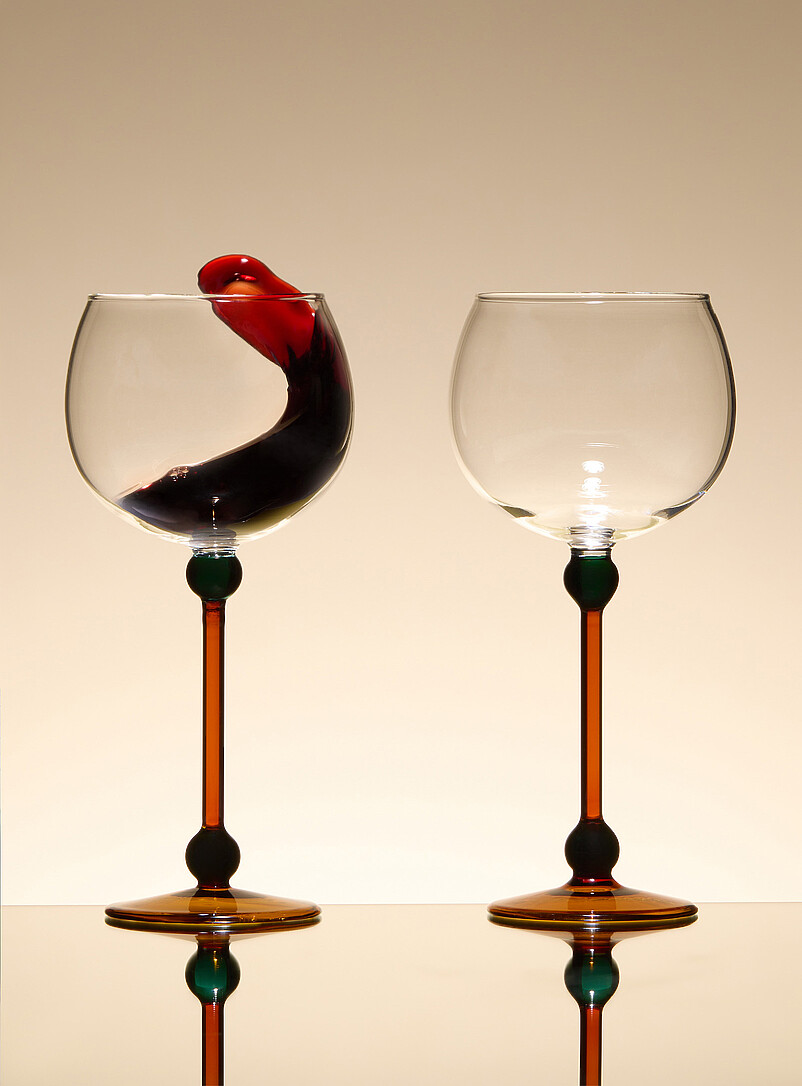
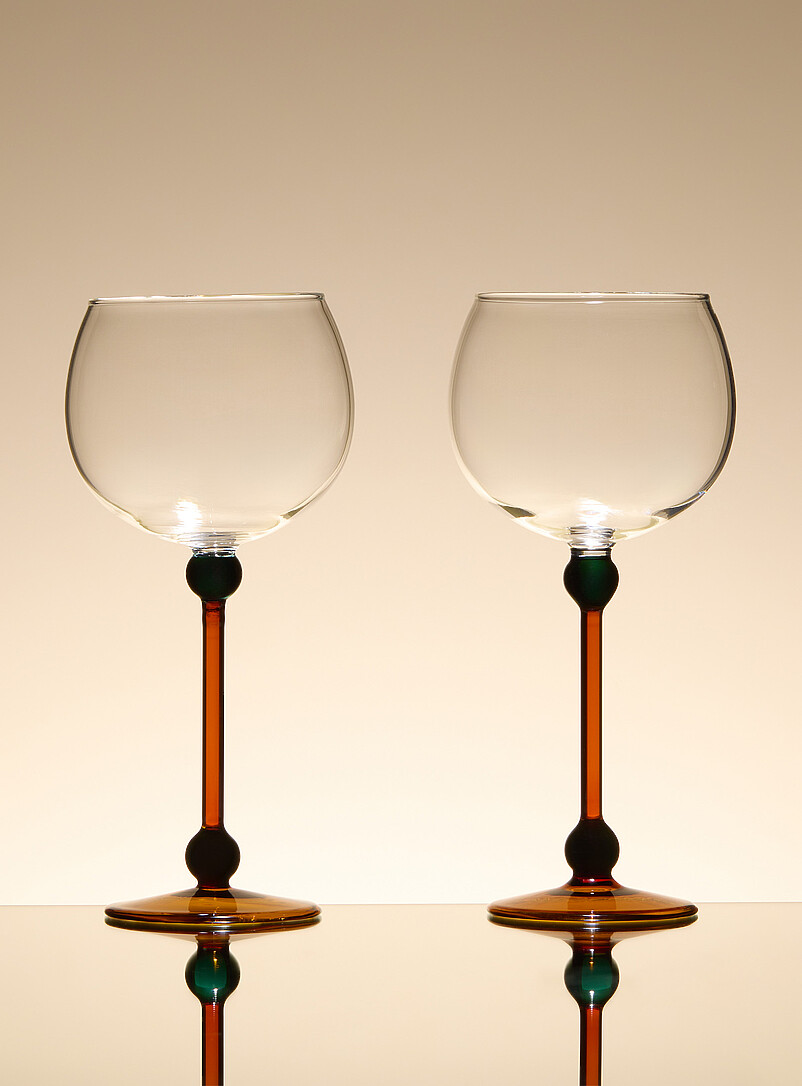
This set of two wine glasses is made from durable borosilicate glass and features a spherical bowl, tall stem, and decorative green bead accents. Each glass holds 500 ml (17 oz.) and measures 4 inches in diameter by 8.75 inches tall. They are dishwasher and microwave safe, making them suitable for everyday use with both hot and cold beverages.
- Material
- borosilicate glass
- Style
- casual, playful
- Category
- Home & Garden > Kitchen & Dining > Barware
Specifications
A set of two colourful borosilicate glass wine glasses with a playful ball design, dishwasher and microwave safe, 500 ml capacity.
Durable borosilicate glass, dishwasher and microwave safe, 500 ml fill capacity.
- Material
- borosilicate glass
- Style
- casual, playful
- Occasion
- everyday
- Gender
- unisex
- Age Group
- adult
- Condition
- new
- Dimensions
- 4x4x8.75 in
- Category
- Home & Garden > Kitchen & Dining > Barware
Additional Attributes
- colourful
- playful
- durable borosilicate glass
- dishwasher safe
- microwave safe
- set of 2
- 500 ml capacity
- 17 oz capacity
Product Insights
The Colour-Pop Balls Wine Glasses Set Of 2 offers a mid-century modern design with a round globe bowl and ball stem, priced at C$39 for the set (C$19.50 per glass), undercutting similar designer stems. Made from borosilicate glass with low-iron clarity and integral amber tint that resists fading, clouding, and chipping, the glasses provide a luminous, gemstone-like clarity that deepens wine colors. Their 500 ml capacity fits a US pint or soda can with ice, and the microwave-safe borosilicate allows use for hot beverages, soup, or oatmeal. However, safe microwave use requires filling to 350 ml and adding a toothpick to prevent superheating, and the 8.75-inch height needs a microwave cavity of at least 10 inches for turntable clearance.
Verified claims
- Design
- Round globe bowl and ball stem evoke mid-century modern and 1970s revival.
- Value
- Per-glass price of C$19.50 undercuts designer stems with similar aesthetic.
- Material
- Borosilicate glass provides low-iron clarity, integral colour, and resistance to thermal shock and chipping.
- Clarity
- Low‑iron borosilicate gives the amber tint a luminous, gemstone‑like clarity.
- Drink appearance
- Warm amber tint deepens white wine gold and enriches red wine color.
- Durability
- The amber tint is fused into the borosilicate glass rather than painted on, so it won't fade or cloud through repeated dishwasher cycles.
- Beverages
- 500 ml capacity fits a US pint, a soda can with ice, and both water and wine in one glass.
- Hot food and drink
- Microwave-safe borosilicate bowl holds soup or oatmeal and serves hot tea or coffee.
- Safe heating
- Fill to no more than 350 ml to leave room for boiling, and add a wooden toothpick or non-metallic stirrer to prevent superheating.
- Microwave clearance
- 8.75-inch height requires a microwave cavity of at least 10 inches for turntable clearance.
- Microwave safety
- Microwave safe; the solid ball stem stays relatively cool compared with the liquid-filled bowl, giving a burn-free handling zone after heating.
- Microwave use
- The 8.75-inch glass needs a microwave with at least 10 inches of interior height so it can rotate freely without hitting the ceiling.
- Stemmed design
- These are stemmed wine glasses with a distinctive ball stem, not stemless.
- Dishwasher safety
- The glasses are dishwasher safe, so everyday cleanup does not require hand-washing.
- Thermal shock resistance
- The borosilicate glass can go from the freezer to a hot dishwasher or from the microwave to a cold countertop without cracking.
- Impact resistance
- Compared with traditional crystal stemware, these glasses are far less prone to chipping or shattering from everyday bumps.
- Playful character
- The round bowl is meant to be playful and visually distinctive rather than a traditional tulip shape.
Product record
- Title
- Colour-Pop Balls Wine Glasses Set Of 2
- Brand
- Simons Maison
- Price
- 39 CAD
- Availability
- In stock
Buying Guide
1 comparison · 7 sourcesUses
A colourful touch to everyday meals
These playful wine glasses from Simons Maison are meant to add a colourful, fun accent to everyday meals at the table. They are dishwasher safe for easy cleanup after meals, and microwave safe as well.[1]
Product comparison
Compared within this brand.
| Colour-Pop Balls Wine Glasses Set Of 2: Choose this if you want wine glasses that add a colourful, playful touch to everyday meals, with tall amber stems, dark green beads, and clear rounded bowls in a Bronze/Amber finish. Each of the two glasses is durable borosilicate glass with a 500 ml (17 oz.) fill capacity, measures about 4 inches across and 8.75 inches tall, and is dishwasher and microwave safe. The thin rims look delicate in images, so handle with care if you prefer sturdier glassware.[1,2] | Small Two-Tone Wine Glasses Set Of 2: Choose this if you want a playful, colourful accent for everyday sipping: the set includes two small stemmed glasses with clear bowls, short faceted olive-green stems, and glossy green bases, each holding 260 ml (8 oz.) and measuring about 3.25 inches (8.25 cm) in diameter and 5.5 inches (14 cm) tall. Made of soda-lime glass, they are hand-wash only and should not go in the microwave, and matching pieces are sold separately.[3,4,5] | Amber Wine Glasses Set Of 2: Choose this if you want a warm amber-hued pair of stemmed wine glasses with subtle vertical fluting and a smooth glossy finish — each glass in the set of 2 holds 480 ml (16 oz.) and stands 8.75 inches (22 cm) tall. The soda-lime glass is dishwasher safe, though it should not go in the microwave.[6,7] |
Image Analysis
2 images- 01
Product
Two clear, large-bowled wine glasses with tall amber stems, rounded green bulb nodes at the stem just under the bowl, and flat amber circular bases. The left glass contains a red liquid splash frozen against the inner bowl wall.
- Bowl shapeBoth glasses have large, almost spherical clear bowls with thin rims and open tops; the bowls are visually bulbous and occupy the upper half of each glass.
2 regions
x 0.06 · y 0.06 · w 0.38 · h 0.42 (high); x 0.52 · y 0.06 · w 0.38 · h 0.42 (high) - Stem constructionEach glass has a long, slender cylindrical stem in an amber/brown glass that connects the bowl to the base.
2 regions
x 0.20 · y 0.55 · w 0.06 · h 0.37 (high); x 0.68 · y 0.55 · w 0.06 · h 0.37 (high) - Green bulb nodeA rounded green bulb sits at the top of each stem directly under the bowl, forming a decorative visible junction.
2 regions
x 0.20 · y 0.45 · w 0.06 · h 0.08 (high); x 0.68 · y 0.45 · w 0.06 · h 0.08 (high) - Base discEach glass rests on a flat, circular amber base that is slightly wider than the stem and shows a reflection on the surface below.
2 regions
x 0.09 · y 0.85 · w 0.26 · h 0.10 (high); x 0.59 · y 0.85 · w 0.26 · h 0.10 (high) - Liquid splash in left bowlThe left bowl contains a red liquid captured mid-splash, forming an upward curved sheet that contacts the inner rim and shows darker pooling at the bottom of the bowl.
1 region
x 0.07 · y 0.14 · w 0.28 · h 0.34 (high)
Other
Studio shot with neutral warm gradient background, mirrored glossy surface producing clear reflections beneath the glasses, centered frontal composition and soft overhead lighting with mild highlights on glass surfaces.
- Background and surfaceWarm beige gradient backdrop with a reflective horizontal surface that mirrors the stems and bases of the glasses.
1 region
x 0.00 · y 0.00 · w 1.00 · h 1.00 (high) - Lighting and reflectionsSoft, diffuse overhead lighting produces gentle highlights along the rim and outer curve of each bowl and bright specular reflections on the bases visible in the reflection area.
- Shot compositionTwo glasses are placed side by side with a small gap; image is framed vertically and centered on the pair; left glass slightly to the left of center.
Colors
clear/transparent· bowl#EAD4BBamber brown· stem and basedeep green· decorative bulb node#44322C- Bowl shapeBoth glasses have large, almost spherical clear bowls with thin rims and open tops; the bowls are visually bulbous and occupy the upper half of each glass.
- 02
Product
Two clear-bowled wine glasses with tall translucent amber stems, a dark green spherical bead near the bowl and a matching dark green bead near the base, round amber bases, and visible mirrored reflections on the surface below.
- Overall compositionPair of stemmed wine glasses shown upright, spaced evenly left and right, each with a large clear rounded bowl, a long straight slender amber stem, a small dark green rounded bead at the junction of bowl and stem, a second dark green rounded bead above the base, and a flat round amber base.
- Bowl shape and materialLarge spherical clear glass bowls with thin rims and glossy reflective highlights; bowls are visually colorless and transparent.
2 regions
x 0.08 · y 0.05 · w 0.38 · h 0.45 (high); x 0.54 · y 0.05 · w 0.38 · h 0.45 (high) - Stem geometryLong straight cylindrical stems that are uniformly thin and vertical, colored translucent amber; stems connect to beads and bases without visible seams.
2 regions
x 0.26 · y 0.42 · w 0.06 · h 0.42 (high); x 0.65 · y 0.42 · w 0.06 · h 0.42 (high) - Green spherical beadsA small dark green rounded bead sits at the top of each stem where it meets the bowl and a slightly larger dark green rounded bead sits just above each base.
4 regions
x 0.23 · y 0.45 · w 0.05 · h 0.06 (high); x 0.62 · y 0.45 · w 0.05 · h 0.06 (high); x 0.23 · y 0.77 · w 0.06 · h 0.06 (high); x 0.62 · y 0.77 · w 0.06 · h 0.06 (high) - Base shape and finishFlat circular amber bases with glossy finish and thin stacked rim profile visible on the edge; bases produce clear reflections on the mirrored surface below.
2 regions
x 0.16 · y 0.78 · w 0.26 · h 0.14 (high); x 0.56 · y 0.78 · w 0.26 · h 0.14 (high) - Reflections and highlightsStrong specular highlights along bowl rims and bases and clear mirrored reflections of each glass on the smooth horizontal surface below.
1 region
x 0.00 · y 0.68 · w 1.00 · h 0.32 (medium)
Other
Studio shot with even warm gradient background, centered symmetric composition, and soft directional lighting causing subtle shadows and reflections; image is sharp and well exposed.
- BackgroundSmooth warm beige gradient backdrop that is lighter near the bottom and darker toward the top.
1 region
x 0.00 · y 0.00 · w 1.00 · h 1.00 (high) - Surface and reflectionGlossy horizontal surface at the bottom of the frame producing near-perfect vertical reflections of the glasses.
1 region
x 0.00 · y 0.72 · w 1.00 · h 0.28 (high) - Shot compositionTwo glasses framed symmetrically with even spacing, both fully visible and centered horizontally in the image.
- LightingSoft studio lighting creating gentle highlights on glass surfaces and subtle shadows within bowls and on stems.
Colors
clear glass· bowl#EDD9C1translucent amber· stem#C54A01deep forest green· decorative beads