Opinel
Sylve Olive Wood Handle Forks Set Of 12
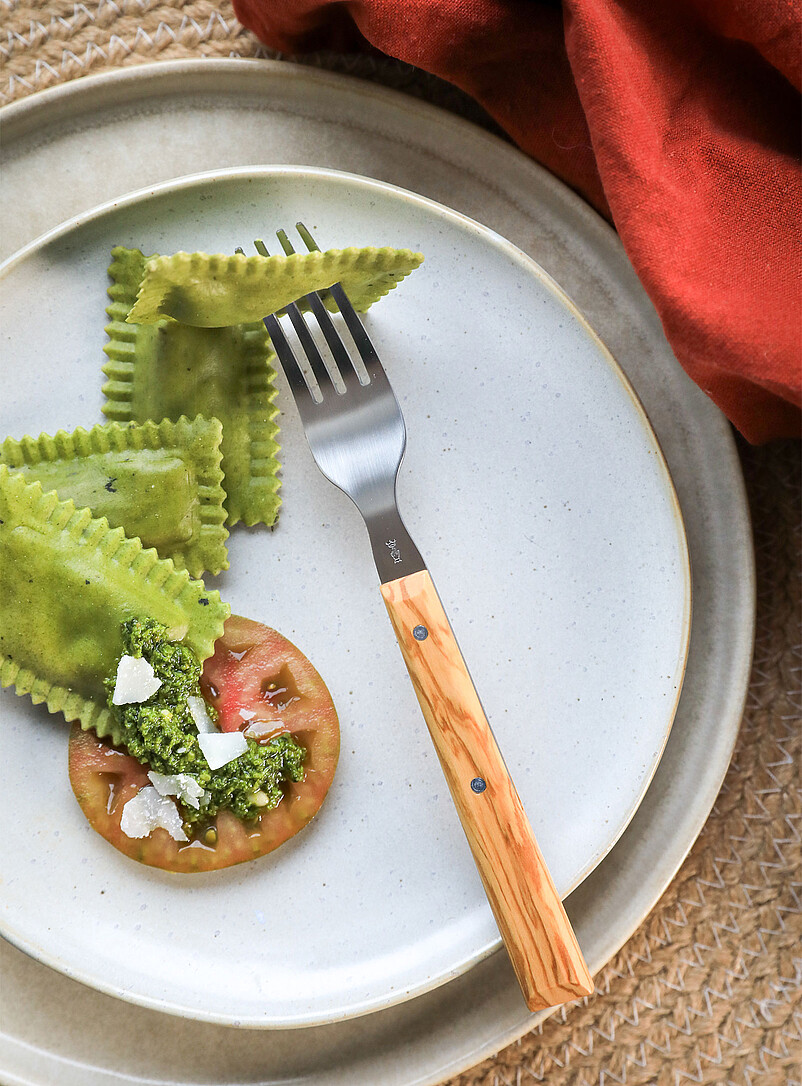
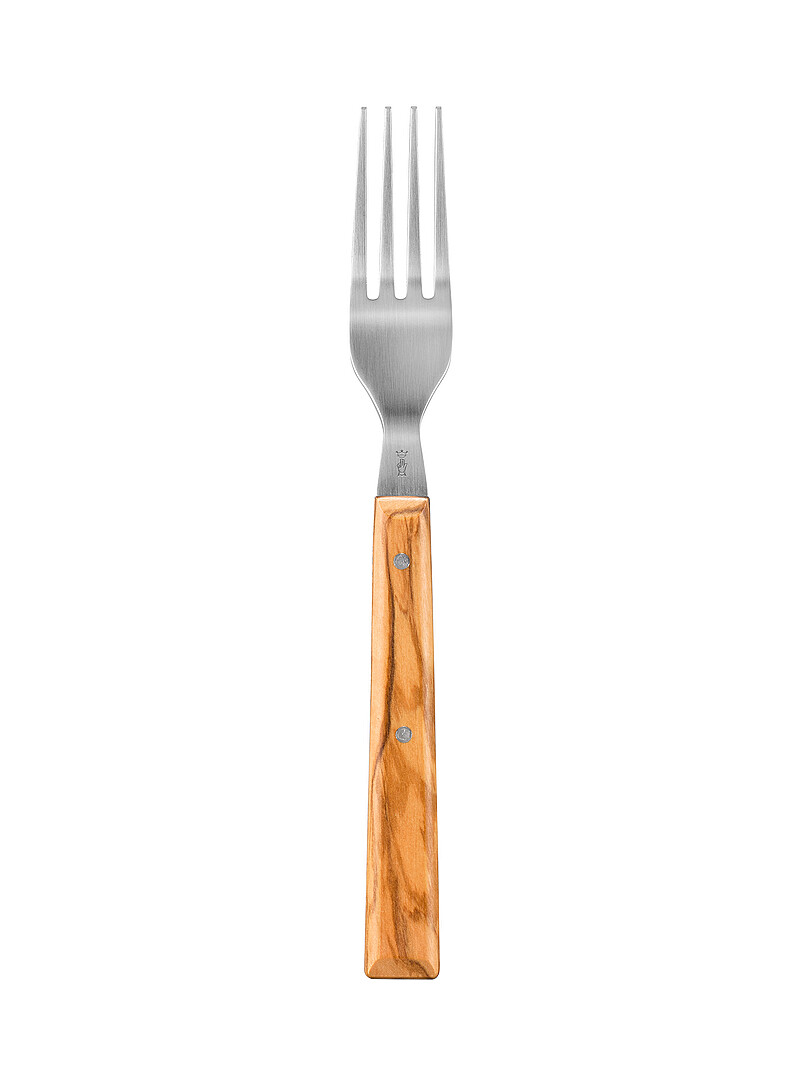
Set of 12 Opinel Sylve table forks, each featuring a brushed stainless-steel four-tine head and a varnished olive wood handle secured by two metal rivets. The handles showcase natural wood veining, and each fork is stamped with Opinel's crowned hand logo on the front and brand name on the back. Made in France with a handle length of 4.5 inches (11.5 cm), these forks are intended for everyday dining and pair with the matching Sylve knives from the same collection.
- Color
- Olive Wood
- Material
- Olive wood and stainless steel
- Style
- classic
- Category
- Home & Garden > Kitchen & Dining > Tableware > Flatware > Forks
Specifications
Set of 12 forks with varnished olive wood handles and brushed stainless steel, by Opinel.
Stainless steel blades; varnished olive wood handles; riveted construction; set of 12; made in France.
- Color
- Olive Wood · brown
- Material
- Olive wood and stainless steel
- Secondary
- stainless-steel
- Style
- classic
- Occasion
- everyday, formal
- Gender
- unisex
- Age Group
- adult
- Condition
- new
- Category
- Home & Garden > Kitchen & Dining > Tableware > Flatware > Forks
Additional Attributes
- varnished olive wood handle
- riveted
- brushed stainless steel
- set of 12
- made in France
- stamped with crowned hand logo
- unique veining
Product Insights
The Opinel Sylve Olive Wood Handle Forks Set Of 12, priced at 312 CAD, combines a century-old heritage—marked by the crowned hand stamp since 1909—with modern design from Swiss studio BIG-GAME, whose works are in MoMA and the Centre Pompidou. Each fork features a full-tang stainless steel blade and a riveted olive wood handle with unique grain, ranging from pale beige to dark walnut, offering a balanced 11.5 cm handle for daily use. The wood's Janka hardness of ~2,700 lbf and natural moisture resistance, plus a food-safe varnish, eliminate the need for monthly oiling, though the set requires gentle hand-washing without abrasives. Made in Portugal, the forks match Opinel's Bon Appétit and Facette knife lines, providing a cohesive place setting at about $26 per fork.
Verified claims
- Heritage
- The crowned hand stamped on the Sylve fork has been Opinel’s provenance mark since 1909.
- Design pedigree
- Designed by Swiss studio BIG-GAME; its works are in MoMA and Centre Pompidou collections.
- Design details
- Riveted olive wood handles match Opinel’s Bon Appétit knives and Facette collection; each handle has unique grain.
- Handle durability
- Solid steel tang runs through olive wood handle, riveted in place.
- Handle appearance
- Visible steel rivets contrast with olive wood grain.
- Wood durability
- Stainless steel head, olive wood handle; the wood is Janka ~2,700 lbf and naturally moisture-resistant.
- Grain uniqueness
- Every fork in the set has a one-of-a-kind olive wood grain, with swirls of cream, gold, deep brown, yellow, and orange.
- Cleaning
- Hand-wash with a soft sponge and mild detergent only.
- Varnish protection
- No monthly oiling required due to food-safe varnish.
- Moisture resilience
- Olive wood's density (900–950 kg/m³) resists moisture, providing a backup if the varnish wears through.
- Value
- 12-piece set costs ~$26/fork and pairs with other Opinel knives.
- Build quality
- Varnished, riveted olive wood handles are hard and moisture-resistant.
- Matching knives
- Pairs with Opinel Bon Appétit Olive Wood Knives for a complete place setting.
- Collection compatibility
- Also pairs with Facette and Table Chic table knife collections.
- Balance
- Full-tang construction and 11.5 cm handle ensure balanced, comfortable daily use.
- Country of origin
- Opinel's international product page states 'Made in Portugal' for this fork.
- Wood grain
- No two handles have identical grain; each fork in a set of 12 is unique.
- Rivets & finish
- Rivets fasten the olive wood scales to a full-length stainless steel core, and the fork head is brushed stainless steel.
- Brand markings
- The Crowned Hand is stamped on the fork head and the Opinel brand on the back; the handle remains logo-free.
- Wood handle
- Olive wood handles resist moisture and dents (Janka ~2,700 lbf).
- Construction
- A full-length stainless steel core and varnished olive-wood handle sealed at the rivets protect against bending and moisture damage.
- Care
- Varnished handles avoid monthly oiling but must be hand-washed without abrasives.
- Tine durability
- The fork is made from anti-corrosive European stainless steel and weighs 100 grams; with proper care, the tines should resist bending under normal use.
- Overall dimensions
- The Sylve fork is 20.3 cm (about 8 inches) long overall, with an 11.5 cm (4.5-inch) handle; it weighs 100 grams and is balanced for everyday dining.
- Sustainability
- Specific sustainability certifications for the olive wood are not mentioned in the available sources.
Product record
- Title
- Sylve Olive Wood Handle Forks Set Of 12
- Brand
- Opinel
- Price
- 312 CAD
- Availability
- In stock
Image Analysis
3 images- 01
Product
A single fork with a light olive-wood handle and a brushed stainless-steel head is visible, placed on a ceramic plate with food nearby.
- Overall geometryFork shown from an angled top view with the handle pointing toward the lower-right and the head with tines toward the upper-center; handle is elongated rectangular in cross-section with straight edges and a squared end.
1 region
x 0.56 · y 0.36 · w 0.28 · h 0.50 (high) - Handle material and finishHandle appears to be light olive wood with visible darker wood grain streaks and a smooth, satin finish.
1 region
x 0.63 · y 0.48 · w 0.16 · h 0.36 (high) - Handle fastenersTwo round metal rivets visible on the handle, flush with the wood surface and darker than the handle.
2 regions
x 0.66 · y 0.56 · w 0.05 · h 0.05 (high); x 0.66 · y 0.70 · w 0.05 · h 0.05 (high) - Fork headBrushed stainless-steel head with four straight tines and a gently curved shoulder where the head meets the neck; surface shows horizontal brushed texture.
1 region
x 0.43 · y 0.16 · w 0.21 · h 0.18 (high) - Stamp or marking on neckSmall stamped or engraved mark on the metal neck near the handle that is visible but not legible at this resolution.Partial
1 region
x 0.49 · y 0.34 · w 0.05 · h 0.06 (medium)
Other
Lifestyle scene showing the fork on a light ceramic plate with green ravioli, a tomato slice with pesto and cheese, a red cloth napkin at top right, and a woven placemat beneath; soft directional lighting from upper left produces gentle shadows.
- PlateTwo stacked round ceramic plates with a pale speckled glaze and a thin darker rim; the fork rests on the upper plate.
1 region
x 0.08 · y 0.04 · w 0.84 · h 0.80 (high) - Food propsGreen square ravioli pieces and a tomato slice topped with green pesto and white cheese shards are arranged near the fork head.
1 region
x 0.09 · y 0.24 · w 0.40 · h 0.40 (high) - Textile propCrinkled red cloth napkin partially visible in the top-right corner, draped over the plate edge.
1 region
x 0.72 · y 0.00 · w 0.28 · h 0.28 (high) - Surface and backgroundWoven natural-fiber placemat visible at the lower-right and outer plate edge; neutral background with soft shadows.
1 region
x 0.68 · y 0.68 · w 0.32 · h 0.32 (high) - Lighting and image qualityEven, diffused directional light from upper-left creating soft highlights on metal and mild shadows; image is high resolution and sharply focused on the fork and nearby food.
Colors
light olive wood· handlebrushed stainless steel· head#B1B6BAdark gunmetal gray· rivets- Overall geometryFork shown from an angled top view with the handle pointing toward the lower-right and the head with tines toward the upper-center; handle is elongated rectangular in cross-section with straight edges and a squared end.
- 02
Product
Single four-tine fork shown full length, stainless steel head with an olive-wood rectangular handle fastened by two visible metal rivets.
- Tine assemblyFork head with four straight, evenly spaced tines and a flat, brushed finish on the functional face.
1 region
x 0.34 · y 0.02 · w 0.32 · h 0.34 (high) - Neck stampingShort tapered neck connecting head to handle with a small stamped mark or logo centered on the neck just above the handle.
1 region
x 0.42 · y 0.32 · w 0.16 · h 0.07 (medium) - Handle shapeRectangular, slightly tapered olive-wood handle with squared-off end and beveled edges visible along the long faces.
1 region
x 0.38 · y 0.40 · w 0.24 · h 0.53 (high) - RivetsTwo round metal rivets visible on the handle, arranged along the vertical centerline.
2 regions
x 0.48 · y 0.49 · w 0.03 · h 0.03 (high); x 0.48 · y 0.63 · w 0.03 · h 0.03 (high)
Other
Product centered on a plain white background with even lighting and minimal shadow; portrait orientation showing the full length of a single fork.
- Shot compositionFork is vertically centered and fills most of the image height, photographed against a uniform white background.
- Lighting and shadowEven diffuse lighting with faint, soft shadowing near the edges of the handle and head; no strong reflections or color casts.
- Image qualitySharp focus on the fork with clear visibility of wood grain and metal texture; no visible noise or compression artifacts.
Colors
brushed silver· metal head and neck#C3C3C3light olive wood· olive wood handle- Tine assemblyFork head with four straight, evenly spaced tines and a flat, brushed finish on the functional face.
- 03
Product
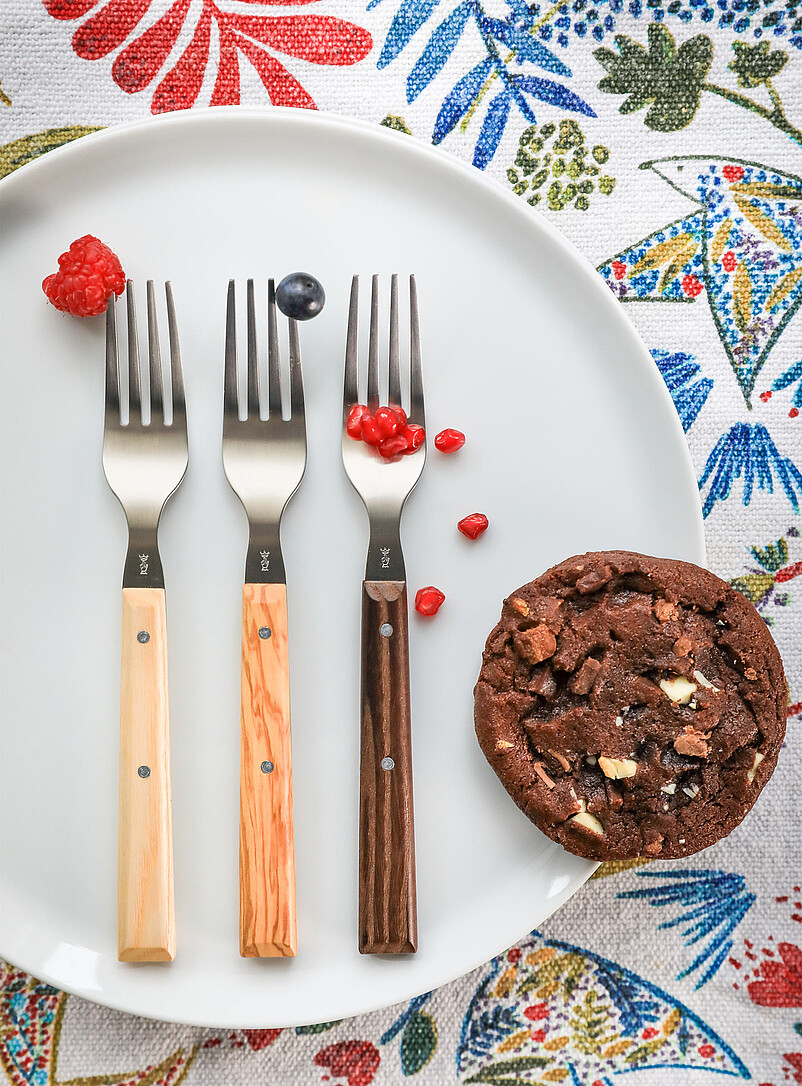
Three metal forks with visible stainless heads and three distinct wooden handles (pale, medium striped, and dark brown) arranged vertically on a white plate with small food items on and near the tines.
- Fork overall geometryThree full-length forks shown from top of tines to end of handles, each with a straight rectangular-section handle that tapers slightly toward the neck and a four-tine stainless head.
1 region
x 0.12 · y 0.12 · w 0.40 · h 0.70 (high) - Tine finishFork heads and tines are matte to satin stainless steel with a brushed appearance and no visible plating.
1 region
x 0.14 · y 0.11 · w 0.36 · h 0.28 (high) - Left handle color and grainLeftmost handle is a very light beige wood with faint straight grain and a smooth, slightly glossy finish.
1 region
x 0.14 · y 0.40 · w 0.08 · h 0.41 (high) - Middle handle color and grainCenter handle is a warm, medium-toned wood with vertical darker streaks creating a striped grain appearance and a smooth finish.
1 region
x 0.26 · y 0.36 · w 0.08 · h 0.46 (high) - Right handle color and grainRightmost handle is a darker brown wood with visible darker grain lines and a similar smooth finish.
1 region
x 0.38 · y 0.37 · w 0.08 · h 0.44 (high) - RivetsEach handle shows two round metal rivets fastening the wooden scales to the metal tang, visible as small circular bright spots on each handle.
1 region
x 0.14 · y 0.48 · w 0.32 · h 0.28 (high) - Neck markingA small light-colored mark or logo is visible on the metal neck of each fork just below the tines; the mark is graphic and not transcribed here.Partial
1 region
x 0.20 · y 0.29 · w 0.20 · h 0.10 (medium)
Other
Lifestyle plate setting with props: a large white round plate occupies much of the frame, a chocolate muffin sits on the plate right side, small fruit pieces are placed on tines and plate, and a multicolored floral textile is the visible background. Soft directional light from upper left casts subtle shadows.
- PlateLarge round white ceramic plate with a smooth matte finish occupies the central area and serves as the staging surface for the forks and food.
1 region
x 0.00 · y 0.00 · w 0.75 · h 0.90 (high) - Food propsSmall food items include a raspberry placed on the left fork, a blueberry on the middle fork, several pomegranate seeds on and beside the right fork, and a chocolate muffin with visible nut pieces on the plate to the right.
2 regions
x 0.08 · y 0.08 · w 0.60 · h 0.60 (high); x 0.62 · y 0.46 · w 0.22 · h 0.30 (high) - Background fabricA textured white textile with a multicolored floral and leaf print is visible around plate edges and fills the image background.
2 regions
x 0.72 · y 0.00 · w 0.28 · h 1.00 (high); x 0.00 · y 0.90 · w 1.00 · h 0.10 (medium) - Shot compositionTop-down angled lifestyle shot cropping the plate slightly on the left and showing forks arranged vertically near plate center; image is tightly framed.
- Lighting and shadowsSoft directional light from upper left produces gentle highlights on metal and wood and soft shadows toward lower right.
Colors
satin stainless gray· metal tines and neckpale beige wood· left handlewarm striped olive wood· middle handledark walnut brown· right handle- Fork overall geometryThree full-length forks shown from top of tines to end of handles, each with a straight rectangular-section handle that tapers slightly toward the neck and a four-tine stainless head.